
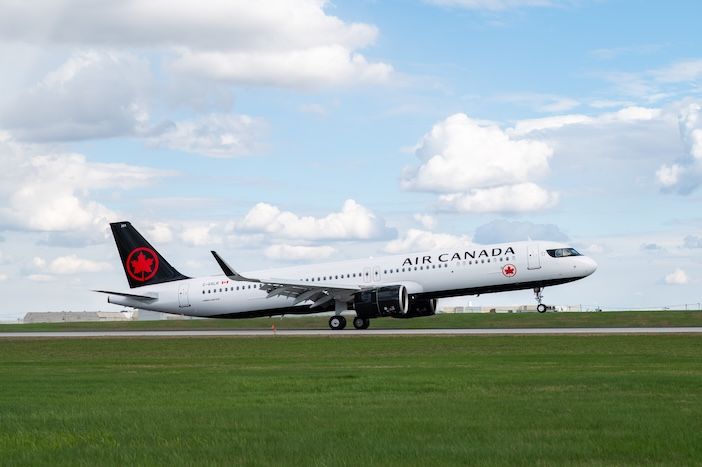
Aircraft Interiors International joined Air Canada for the inaugural flight of its first Airbus A321XLR. While this was a landmark flight for the airline, it was a regular scheduled revenue flight: flight AC413 from Montréal to Toronto, on 9th June, 2026.
The flight was preceded by a celebration event at the gate in Montréal–Trudeau International Airport (YUL), with a DJ, snacks, balloons galore, and a few slightly baffled-looking passengers. There were also some brief speeches by Mark Galardo, EVP and CCO at Air Canada; Colin Bole, SVP customers, North America at Airbus; and Yves Beauchamp, president and CEO of ADM Aéroports de Montréal.
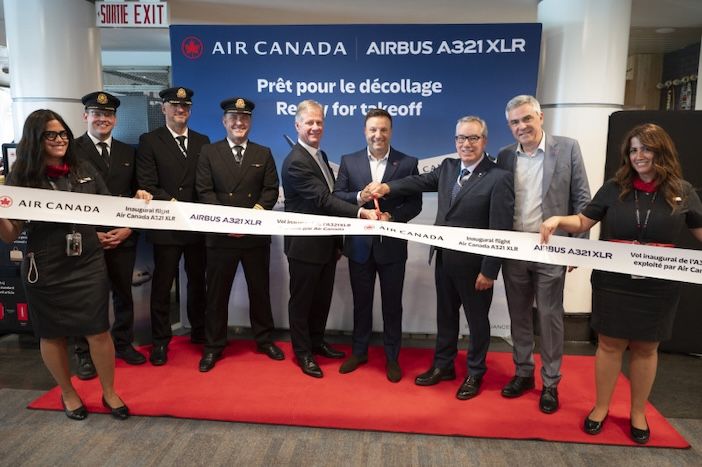
“Today, we celebrate an aircraft that will unlock new destinations, improve service on existing markets, and enhance the onboard experience,” said Mark Galardo, emphasising that the extra-long range of the A321XLR gives the airline more flexibility and efficiency for serving transatlantic and transcontinental routes across North America, including ‘long and thin’ routes.
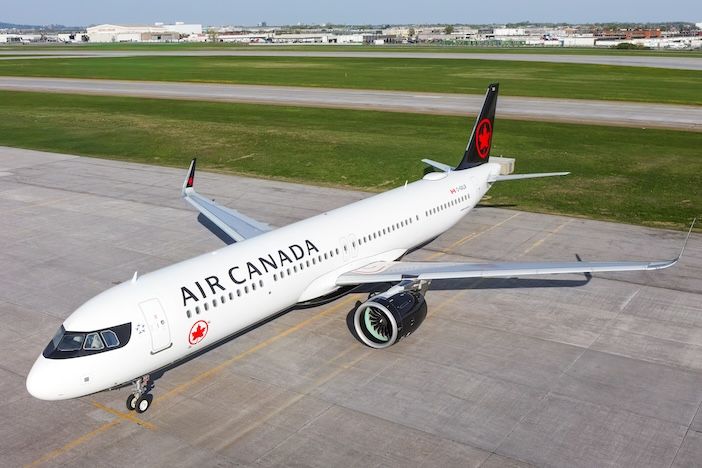
So what’s in store?
I actually boarded the A321XLR twice at Montréal. This was not just for fun, but to ensure I experienced as much of the aircraft as I could.
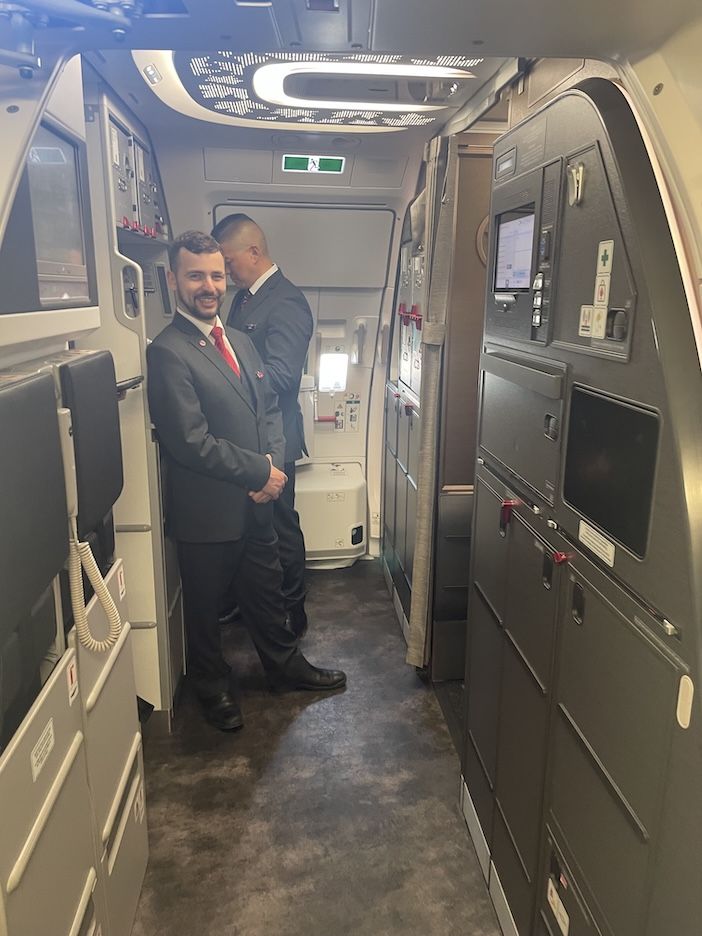
I received a warm welcome from the Air Canada crew both times I passed through door 1L . As passengers board the A321XLR through the forward doors, they walk below a custom light feature. The light passes through a pattern of maple leaves, designed to give the effect of strolling under a canopy of maple leaf foliage.
This was the first time I had physically seen an example of the airline’s new Glowing Hearted design strategy. The leaf effect was perhaps a little too subtle to be picked up in daylight – not as obvious as say the ‘Facets of Abu Dhabi’ geometric light pattern the greets passengers on board Etihad’s A380s – but I expect the full effect may be more pronounced in nighttime flights.
Business class
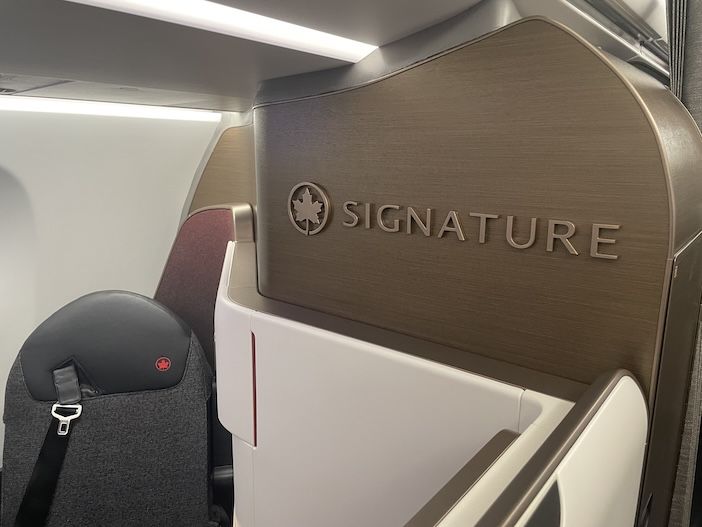
Turning right presented me with a rather more obvious application of Glowing Hearted though: the 14-seat Signature Class cabin, which marks the first offer of lie-flat seats in a Canadian commercial narrowbody aircraft.
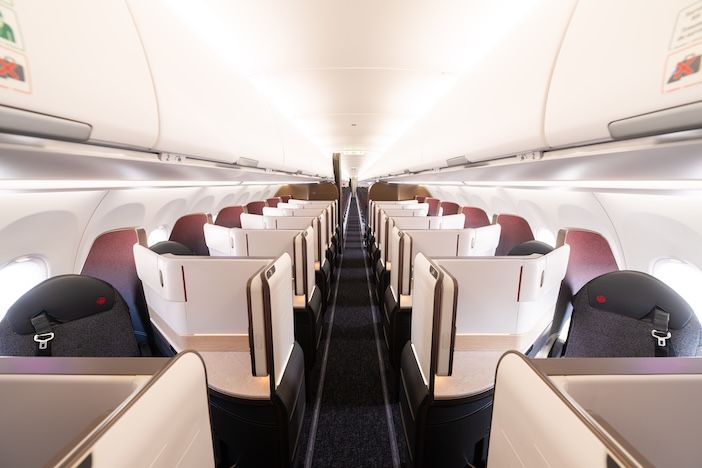
Air Canada has chosen the Aurora platform from Collins Aerospace for the A321XLR business class, with a shape and installation angle designed to conform to the exact dimensions of the XLR cabin and maximise passenger living space. It’s a herringbone configuration, so the seats face the aisle at an angle of around 45 degrees.
With the herringbone layout of some other seat models does not offer privacy, when sitting within the Aurora suite you can only see a little of the IFE screen of the seat opposite, partly due to a slight kink in the shape of the suite.
This level of privacy means no doors are required, and indeed the Air Canada team chose not to fit them because they felt it would be more beneficial to give the space to the aisle width in order to help ease boarding and service efficiency.
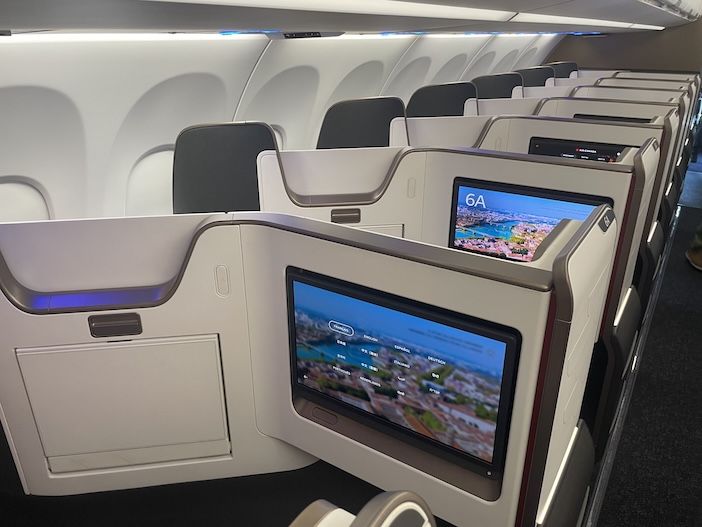
The XL Airspace overhead stowage bins, which have around 60% more storage space than standard, also help streamline boarding, in both business and economy class.
The privacy in the suites is great for solo travellers, while for people travelling with a companion in the adjacent seat, a privacy divider screen (custom designed for Air Canada) can be lowered to make it easier for these passengers to talk to each other.
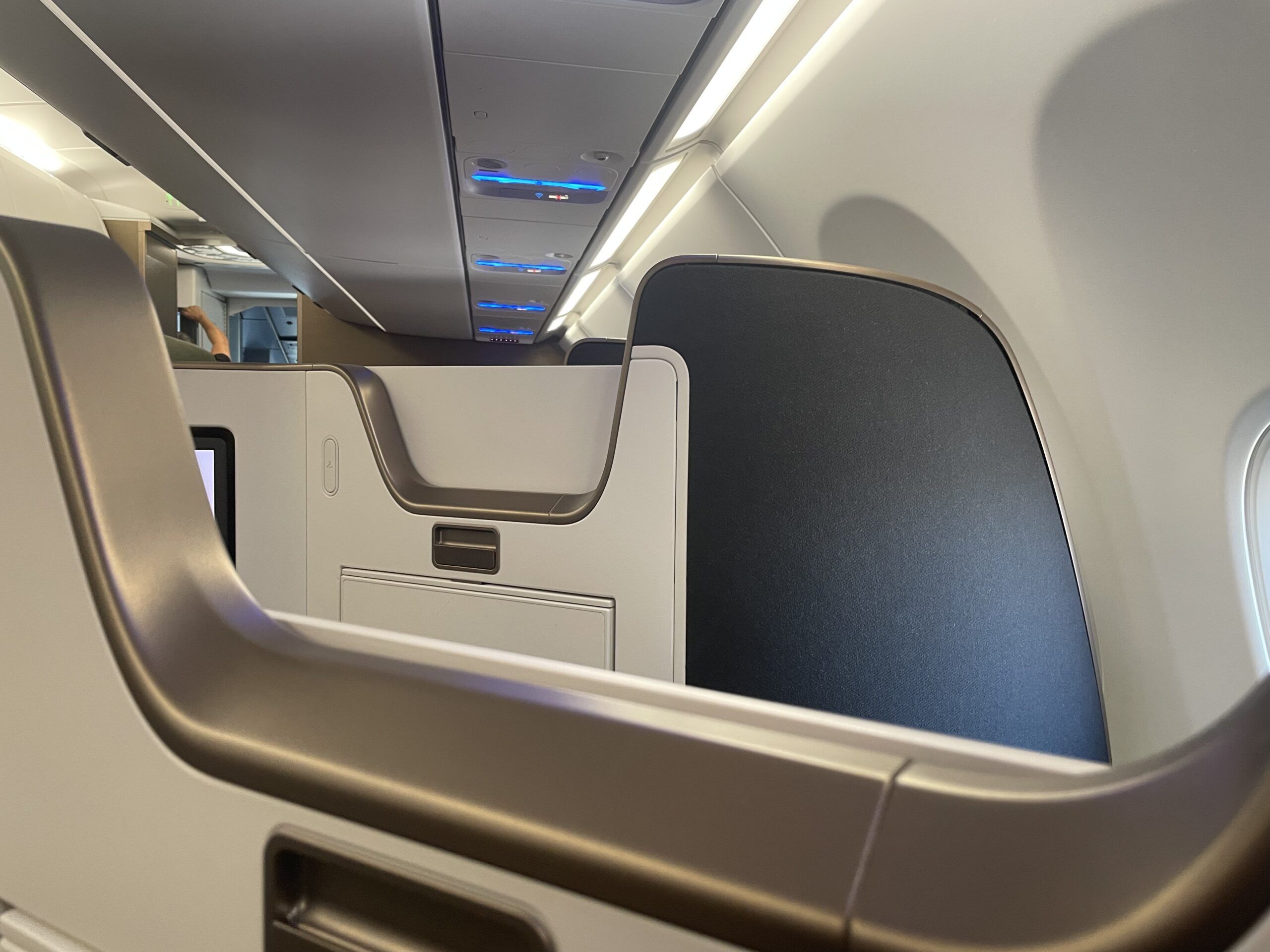
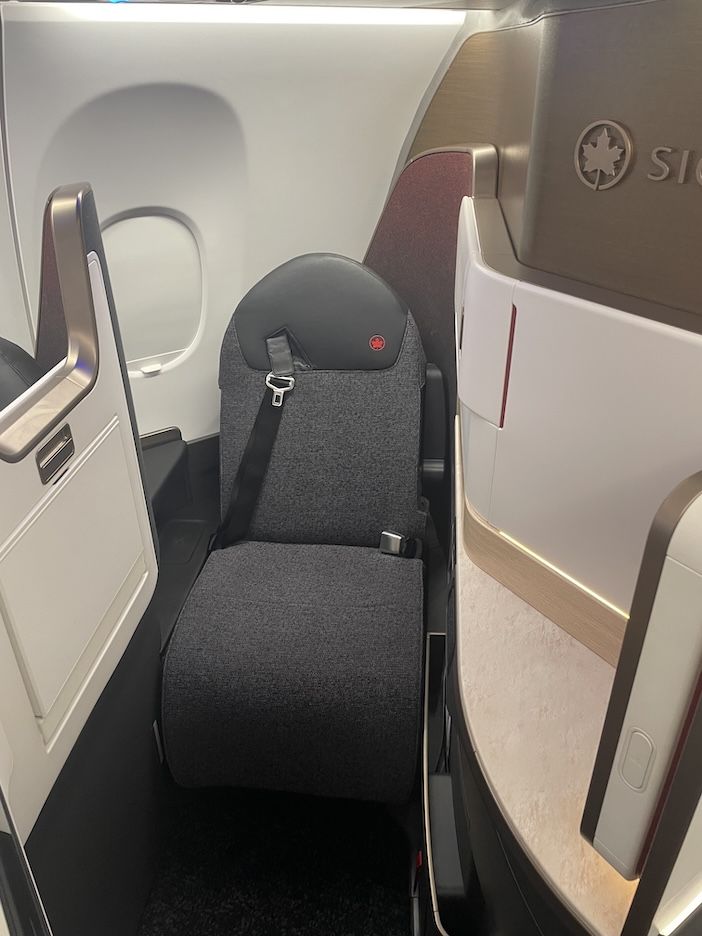
The Air Canada team considered trade-offs with every design decision, and made a few small alterations to the Aurora platform, such as moving the ottoman a couple inches to enable a longer bed – and indeed the bed seemed perfectly comfortable in my admittedly brief trial.
A cosy feel
The space has a warm feel, with warm grey and stone tones, soft fabrics, wood grain details, and warm bronze metal accents from the Glowing Hearted scheme.
You can find out more about Glowing Hearted in our interview with John Moody, Air Canada’s managing director of onboard product, in the June issue of Aircraft Interiors International magazine.
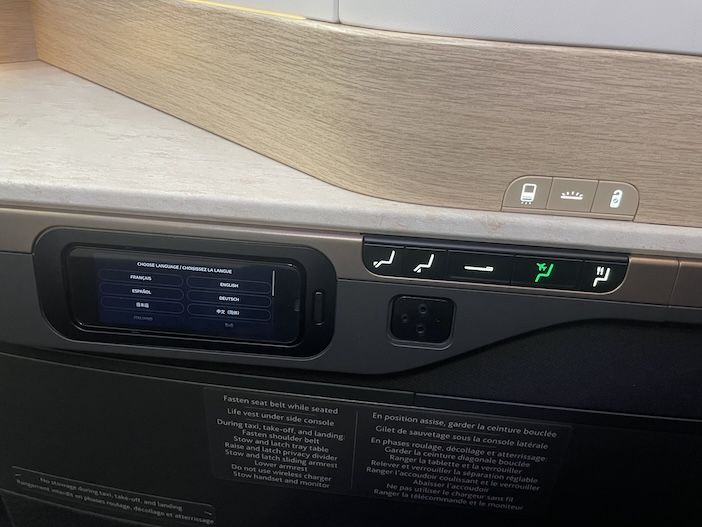
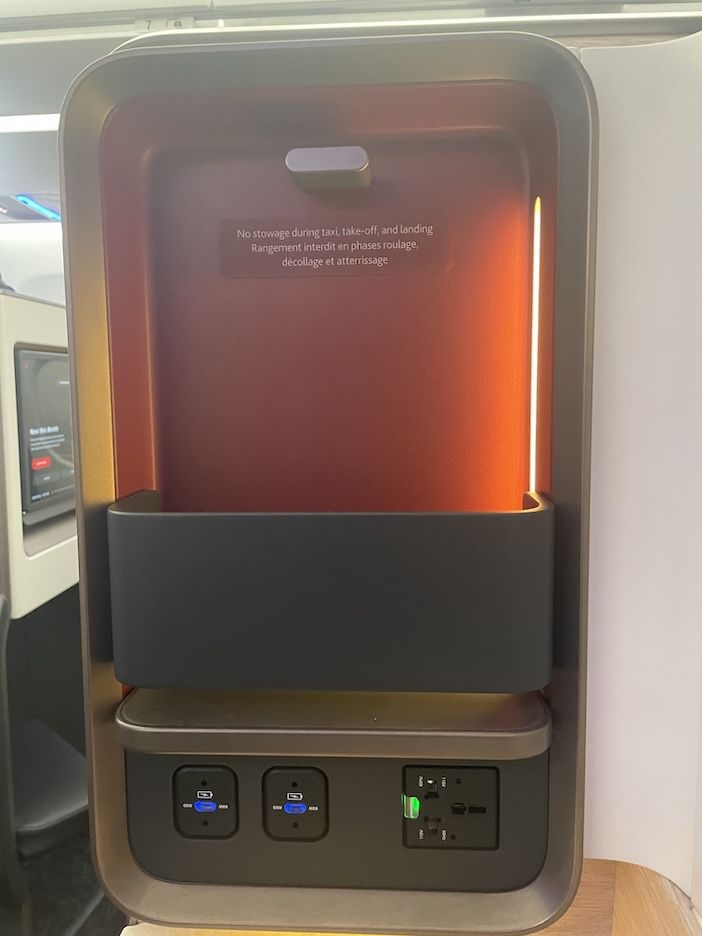
A pale maple wood trim curves along the side of the suite, with accent lighting gently illuminating a usefully large quartzite-topped side surface that is large enough to hold a laptop or devices. There is also a stowage cubby for devices such as tablets (though it can’t be used during TTL), complete with a power outlet and USB-C sockets.
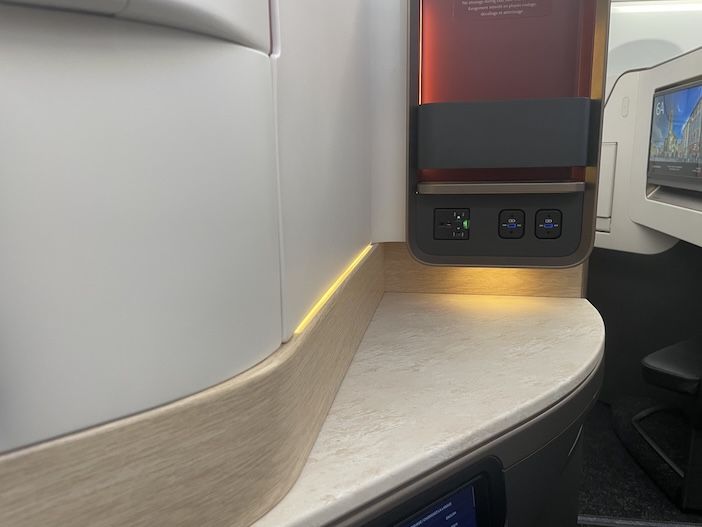
For those that prefer to have their devices charging while they use them in the various seat and bed modes, there is also a USB-C socket in the adjustable leather-trimmed armrest / side surface, and a wireless charging pad below it.
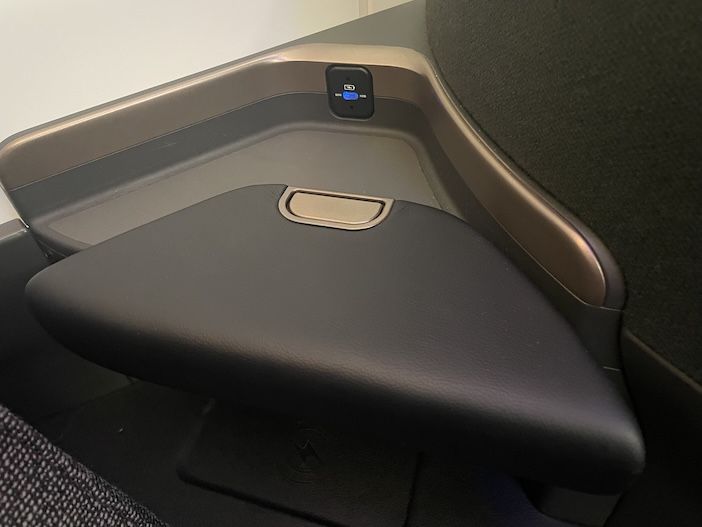
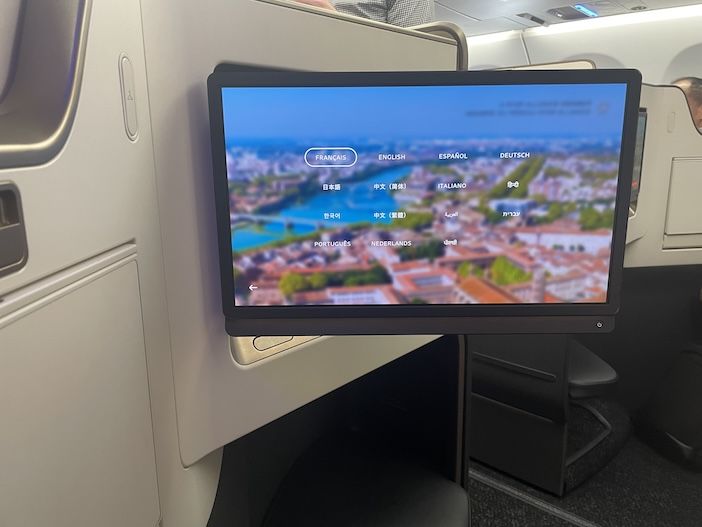
There is another stowage pocket at floor level, a large bi-fold meal table, and a fold-out IFE monitor. The monitor is a 19-inch 4K OLED Astrova screen from Panasonic Avionics, which when deployed further enhances privacy from the aisle. The screen needs to be stowed for a moment while meal trays are delivered to or collected from the table, but that is no particular hardship.
They have really fitted a lot of comfort and features into a narrowbody suite – enough to give the A321XLR in-suite experience long-haul appeal.
Back to the gate, off to the back
I returned back to the gate to rejoin the celebrations, during which I spent a little lime with Colin Bole, SVP customers, North America at Airbus. He explained that the A321XLR is a good fit for North American operators, given the density of regional airports, long transcontinental routes, and customers’ desire for transatlantic routes to more destinations. The 4,700 nautical mile (8,700 km) range of the A321XLR means it can serve them all, and remain efficient in periods of lower customer demand.
“You can’t possibly serve all those airports with widebodies, but there are many airports in North America that are perfectly suited for an aircraft of this size,” said Bole. “And I think in the case of Air Canada in particular, in the way they’re trying to pick up traffic from the US, transit it to Montreal and over to Europe, I think this is a perfect blend with their widebodies, which will allow them to open up very nice routes.”
He gives the example of the aircraft’s first transatlantic route, which is Montreal to Toulouse. Air Canada has been operating this route for a couple of years with widebodies, but they can’t optimally fill a widebody five to six days a week in every season. “But with the A321XLR, I think they’re looking forward to having an optimal daily service,” said Bole.
And so, again passing under the maple leaf lighting and passing down the maximised Signature Class aisle, I tried out the 168-seat economy-class cabin for flight AC413 from Montreal to Toronto, which is a quick hop of around 90 minutes.
It’s a smart-looking cabin, with the seats, in a 3-3 configuration, fitted with graphite grey seat covers.
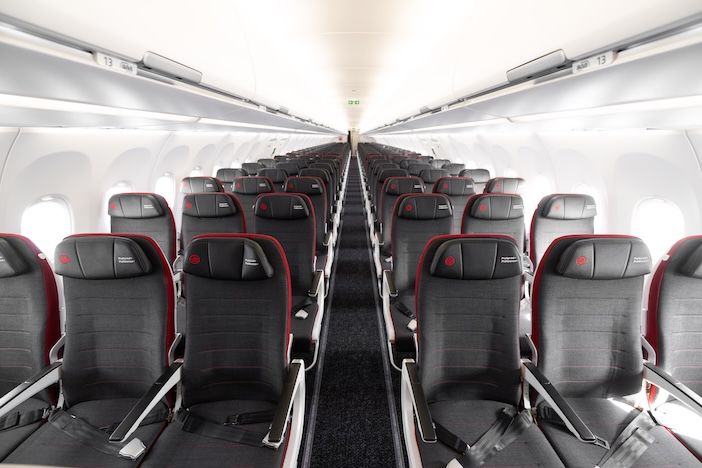
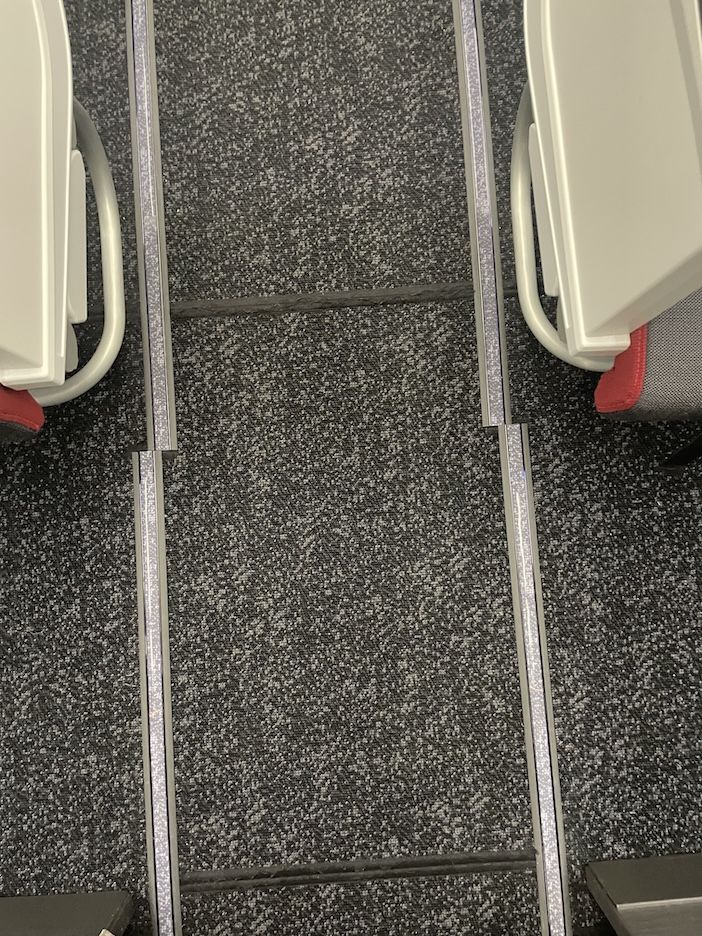
I was in seat 20C, which is one of the 36 Economy Preferred seats – in this case an exit row seat with a 36-inch pitch rather than the standard 31 inches (there is no premium economy offer in the A321XLR, so these seats serve that role).
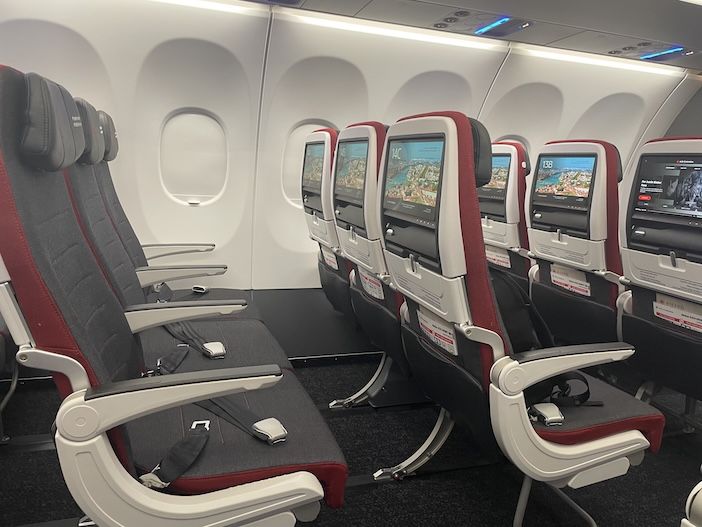
Whichever seat you book in the economy cabin, you will enjoy an 18-inch-wide seat, which is an inch more than you’ll find in many widebodies. It’s a good seat: the Meridien seat from Collins Aerospace, which will be familiar to some Air Canada customers from its Boeing 737 MAX 8 and Airbus A220 fleets.
The A321XLR’s seats are the Meridian+ model, which brings a few enhancements for long-haul comfort such as an articulating seat diaphragm and moveable head rest.
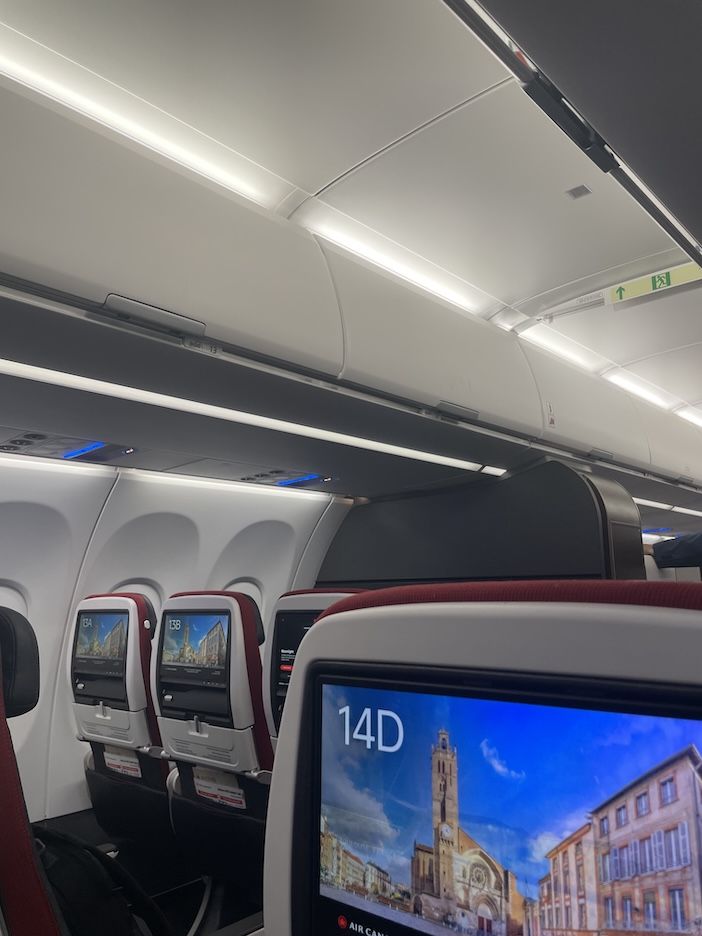
The economy seatback is packed with features, including extra stowage options, USB-C and AC power outlets, and a 13-inch 4K OLED Astrova IFE screen with Bluetooth audio, and actual physical buttons for power, volume, crew call and reading light.
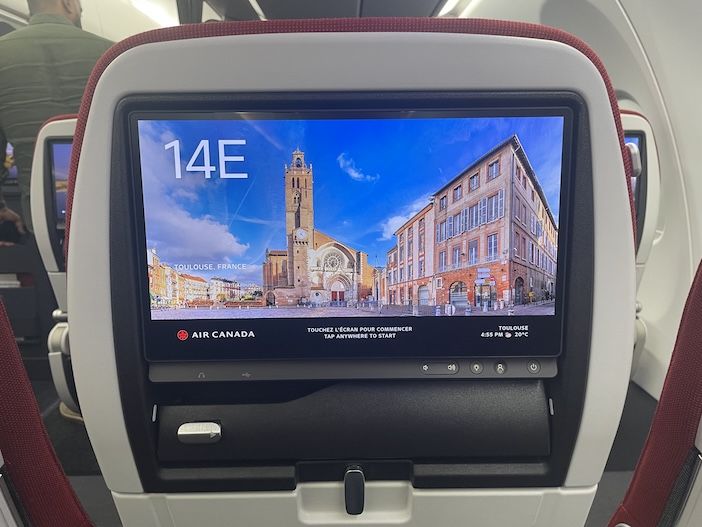
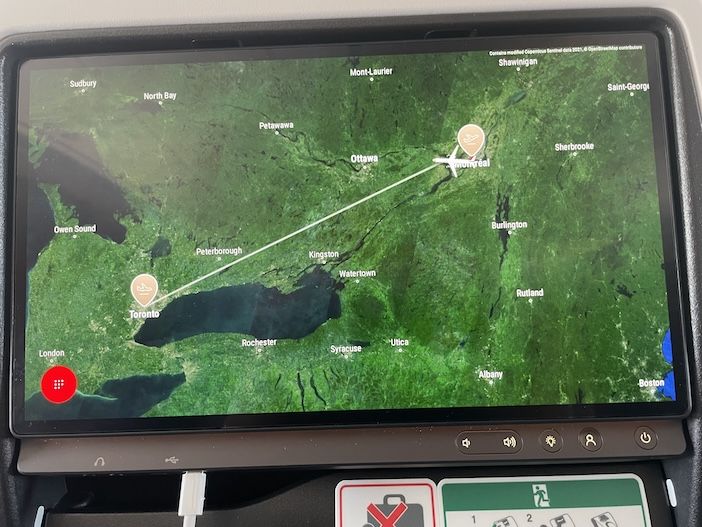
If you have seen an Astrova display before, you will know how good it is. A few passengers were enjoying TV programmes during the flight (though there were signal issues on the live programming), but being an inaugural flight several passengers (me included) opted to follow the flight via the many live feed options on the Panasonic Avionics Arc 3D moving map system.
Cabin wi-fi was also available on the flight, supplied by Intelsat’s 2Ku system, powered by the ThinKom ThinAir Ku3030 Ku-band antenna. The service is complimentary for all members of Air Canada’s Aeroplan loyalty programme, courtesy of a sponsorship with Bell.
A useful feature is the amenities tray below the IFE screen that can safely enclose small but essential items such as keys or pens, and that can be folded down to serve as a device holder. Even the coat hook can also function as a cable wrap, helping keep the space uncluttered and simplifying passenger egress during flight.
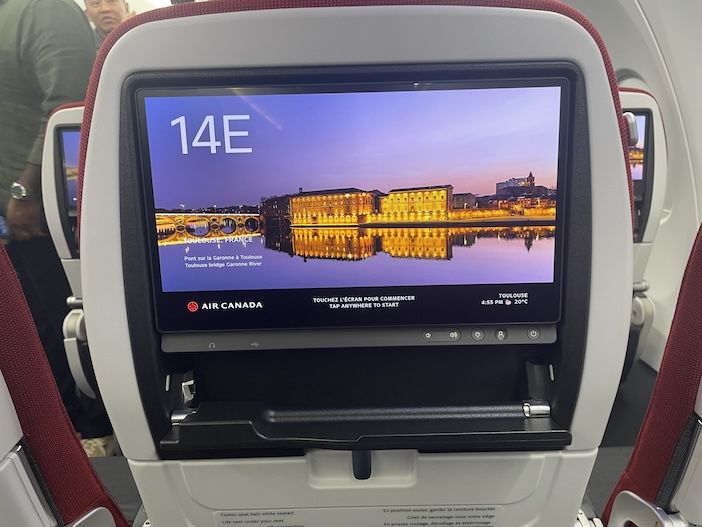
Below the tray is the bi-fold meal table. This is the first bi-fold meal table to feature in Air Canada economy class, and it has been added a response to changing passenger needs. If a passenger is just reading or watching a device with a drink, they can enjoy the space efficiency of the half-folded table. It was perfect for the short hop from Montreal to Toronto, during which we enjoyed a drink and a snack.
For longer routes, with just a quick flip during meal service, a full table is created that can hold a meal tray.
And below that is the lower literature pocket, with a handy smaller pocket at the front (another bespoke detail for Air Canada) that can hold small items such as a wallet or passport, keeping them in sight so they are not left behind.
It’s a solid offer in economy, with the 31-inch seat pitch being fairly standard in the market. I do feel the 36-inch pitch of the Preferred seats in the exit rows and select bulkhead rows would be well worth considering for a longer flight, and they can represent good value, at a premium of $20 to $199 CAD/USD, depending on route and demand. Aeroplan Elite Members and customers travelling on a Latitude or Comfort fare can select a Preferred Seat at no extra cost on select routes.
Summary
A big question is whether people would be happy with a mid- to long-haul flight on a narrowbody.
In business class, of course a widebody suite (and the overall cabin) will be larger and feel larger, but the route profiles for Air Canada A321XLRs make such direct comparisons largely irrelevant. But it is important that Air Canada offers a consistent customer experience across its fleets, and one that will satisfy customers flying with the airline as a Star Alliance partner. The A321XLR business-class experience is a high-quality one, and it should be well received.
As mentioned, the in-seat experience in economy is actually better and wider than that found in many widebodies, and the XL overhead bins save a lot of hassle. Some may also find the smaller passenger numbers make for a more relaxing experience. The only niggle is that the three toilets for economy class are located at the rear of the 168-seat cabin, which can mean queues forming past the last seat rows.
The A321XLR cabins bode well for the experience in the airline’s new B787-10s coming online later this year and the subsequent cabin retrofits across Air Canada’s fleets.
Air Canada has 12 routes planned for its A321XLRs as the fleet of 30 aircraft comes online. The routes will include flights from Montréal (YUL) to Toulouse (TLS), Edinburgh (EDI), Calgary (YYC), Palma de Mallorca (PMI), Berlin (BER), Catania (CTA) and Nantes (NTE), and from Toronto (YYZ) to Copenhagen (CPH), Manchester (MAN) and Budapest (BUD).
Full disclosure: Air Canada and Airbus paid for my flight. This review is an honest account of my experience.
With thanks to Antonia Moga and Amélie Forcier for their assistance.