
I am registered blind, and I fly regularly. Most journeys go smoothly, but over the years I have collected my share of moments that made flying harder than it needed to be. Safety demonstrations I could not see. Seatback screens I could not use. Menus I could not read. Touchscreen kiosks that gave me nothing back. Staff who spoke to the person next to me rather than to me.
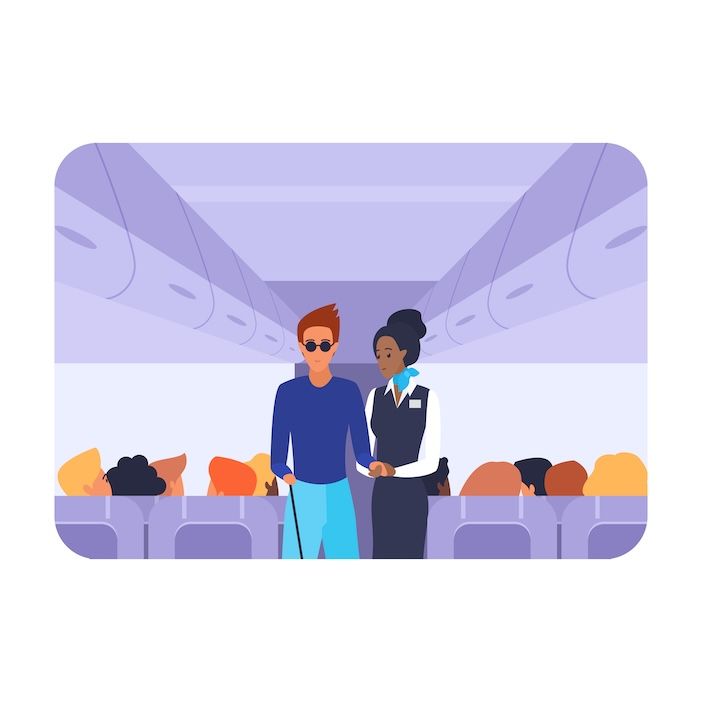
I have also had the opposite. On one flight, a member of the cabin crew came to my seat before take-off, introduced themselves and talked me through where the exits were, where the call button was, how the seatbelt worked and what to expect. It took a couple of minutes, and I felt safe and included for the rest of the journey.
The gap between those two experiences is rarely about money or equipment. It is about a handful of things that airlines and airports can fix, and staff who know how to fix them.
The regulation (EC No 1107/2006) on the rights of disabled air passengers, which applies in the UK and the EU, expects airlines and airports to give the information needed to take a flight in accessible formats, and to give disability awareness training to staff who deal with the public.
In the EU, the European Accessibility Act has applied since June 2025, covering airline websites, apps, e-tickets, real-time travel information, check-in kiosks and payment terminals. Demand is rising too: the Civil Aviation Authority says a record 5.9 million passengers used assistance at UK airports in 2025.
Five easy fixes that would make flying better for passengers with sight or hearing loss
-
The two-minute safety briefing
The standard safety demonstration relies on sight, and the recorded announcement relies on hearing. On some flights nobody has come to my seat, and I have sat through the whole journey without a clear picture of where anything was. All too often the question of whether a disabled passenger gets a proper briefing depends on who happens to be working that day.
The fix: build a short personal briefing into procedures for any passenger who has asked for assistance or says they have sight or hearing loss. Crew helping a blind passenger should introduce themselves, ask them if they would like a briefing, tell them how many seat rows it is to the nearest exits, and offer to guide their hand to the call button and seatbelt.
For a deaf passenger, face them, point to each part of the safety card, and agree how you can best pass on announcements during the flight.
-
The seatback screen I can’t use
On long flights I sit in front of a screen I cannot use. It is a flat sheet of glass with no speech and no sound, so I cannot tell whether I have started a film or switched the language to Portuguese. The headphones work perfectly; I just cannot get anything to play through them without asking a busy crew member for help.
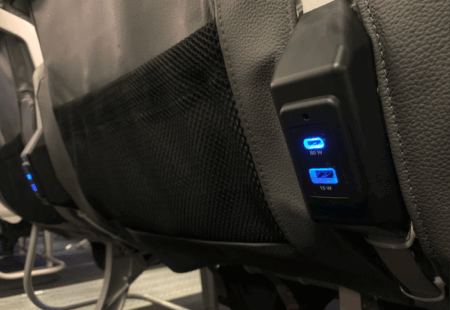
The technology already exists. Entertainment suppliers describe features such as text-to-speech, screen reader support, audio description and captions, and the phone in my pocket speaks every button. But there is no specific rule requiring accessible inflight entertainment in the UK, and no final one in the US, so progress depends on airlines choosing to do it.
The fix: insist on speech output, audio description and captions when buying or upgrading IFE systems. Make sure crew know how to switch on any accessibility mode already fitted. Let passengers stream content to their own phones and tablets, where the accessibility is built in.
Until then, train crew to ask, ‘Would you like me to set up a film or the inflight map for you?’. Crew should also remember to come back when a selected movie or TV show finishes.
-
Self-service everything
Check in on the app, print the bag tag at the kiosk, drop the case at the automated bag drop, scan through security and walk through the passport e-gate. Self-service is quicker for most passengers. But for a blind passenger, every step in self-service can be a touchscreen, a camera or a slot that cannot be found, with nobody behind a desk to ask. Even e-gates are not open to everyone: Lord Blunkett, who is blind, told TTG’s Fairer Travel Diversity Forum in 2024 that he cannot use these gates and estimates that tens of thousands of British travellers are in the same position.
The fix: never remove the human option. Keep a member of staff near every self-service area – one who offers help without being asked and knows how to guide a blind passenger. When self-service machines are replaced, specify speech output, a headphone socket and tactile keys for the new machines. Test apps and boarding passes with screen reader users. Tell passengers where to find help – and do so before they travel.
-
Tea, coffee, and a menu I can’t read
By the time the meal trolley has come down the aisle and arrived at my seat, everyone else has read the menu card or scanned the QR code to access a menu. I have been handed menus on flights that I simply could not read. The choice is to ask the crew member to read the whole thing out while a queue builds, or to say ‘just a coffee, please’ and miss out.
Then there is the card payment machine. If crew say ‘just tap there’ it leaves a blind passenger guessing how much they have paid.
The fix: offer to read out the menu, with prices, before the passenger has to ask. Say the total out loud before and after payment. Describe what you are handing over and where you are putting it.
Airlines should make digital menus with real text that works with a screen reader. They should also offer accessible pre-ordering, keep a large print menu on board, and choose payment terminals that give audible feedback. A passenger who cannot read the menu buys less, so this is good business as well as good service.
-
Deaf passengers and the boarding gate
Picture a passenger waiting for their flight at gate 14, watching a screen that still says gate 14, while people around them pick up their bags and leave. There has been an announcement she did not hear. By the time she finds someone to ask, the flight has moved to the other end of the terminal and boarding has closed. This passenger is imaginary, but the situation is not.
RNID (the Royal National Institute for Deaf People) says that more than 18 million people in the UK are deaf, have hearing loss or have tinnitus. Many of them never ask for assistance, so staff do not know someone has missed an announcement until it is too late.
The fix: show every announcement as well as saying it, on screens and by text or app notification. Tell passengers who have asked for assistance about any changes, and do it in person. Face them, keep your mouth visible and do not shout. Keep a notepad at every gate desk, check hearing loops are switched on and working, and offer remote sign language interpreting where you can.
Make sure cabin crew know who has hearing loss, so messages from the flight deck can be passed on in person or in writing.
You don’t know what you don’t know
Almost every barrier in this article has the same root cause. Staff are not unkind, and most want to help. They simply have not been shown how. A crew member who has never been taught to guide a blind passenger will take their arm and steer. A gate agent who has never thought about hearing loss will assume the announcement reached everyone. Equipment matters, but the quickest and cheapest improvement is people who understand sight and hearing loss and feel confident to act.
That means training everyone who meets passengers, including contractors. It means making training more practical, with time to practise guiding, describing and communicating clearly, and hearing from people with lived experience. And it means refreshing that training regularly, so that a good experience becomes the standard rather than a matter of luck.
Visualise Training and Consultancy Ltd provides visual impairment awareness e-learning, face-to-face training, and deaf and hearing loss awareness e-learning, for teams who serve the public. Visit their website if you would like your airline or airport staff to feel more confident supporting passengers with sight or hearing loss.