

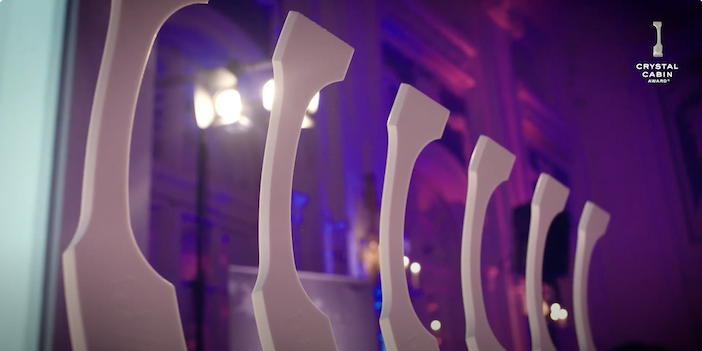
What are the most innovative new ideas that can improve the airline passenger experience? That question is answered once a year by a panel of 27 aviation industry experts from around the world that gathers to decide the winners of the Crystal Cabin Award (CCA). Now in its 19th year, the CCA is the leading international award that recognises excellence in aircraft cabin innovation.
For the 2026 awards the 27-strong awards judging panel (listed below) held an initial selection process to decide a shortlist of 85 innovations that represent advancements in the aircraft cabin and passenger experience. During another round of voting, the panel decided the 24 finalists in the Crystal Cabin Award 2026.
Following a final round of in-person presentations to the jury by the finalists at an event in Hamburg, the votes were then cast to decide the winners across the eight categories of the awards.
The 2026 Crystal Cabin Awards ceremony was held on 14th April at the beautiful Handelskammer Hamburg (Hamburg Chamber of Commerce), which played host to the biggest names in the aviation, airline and aircraft interiors sectors, all eager to find out about the latest innovations and connect with their peers over dinner.
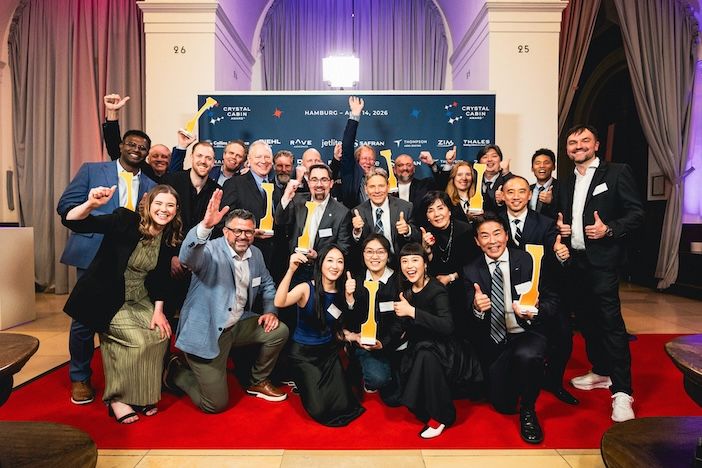
Welcome speeches were made by Dr Melanie Leonhard (SPD), a German politician and historian currently serving as Hamburg’s Senator for Economy and Innovation, with emcee duties undertaken by journalist and presenter, David Patrician.

Guests were also welcomed by Ralf Gust, managing director of Hamburg Aviation and president of the Crystal Cabin Awards Association (the organisers of the awards). Gust held senior roles in the aviation industry over two decades before taking on the role at Hamburg Aviation in September 2022 and becoming president of the Awards in 2024.
Gust has done a brilliant job in arranging and developing the awards, and when it was announced later in the evening that he is stepping down later this year, it was an emotional moment for many, not least Ralf. He will be missed, but his retirement is well deserved.
So who won the 2026 Crystal Cabin Awards?
Category: Cabin Concepts
The Cabin Concepts category recognises visions that redefine space, function, and aesthetics in the airline passenger experience.
Winner: All Nippon Airways (ANA) with THE Room FX
Japan-based All Nippon Airways (ANA) was against some tough competition, but the design of its ‘THE Room FX’ business-class suite for the Boeing 787-9 Dreamliner prevailed. The ‘FX’ in the name ‘THE Room FX’ stands for Future Experience. That experience includes flexibility, greater living space, and more comforts.
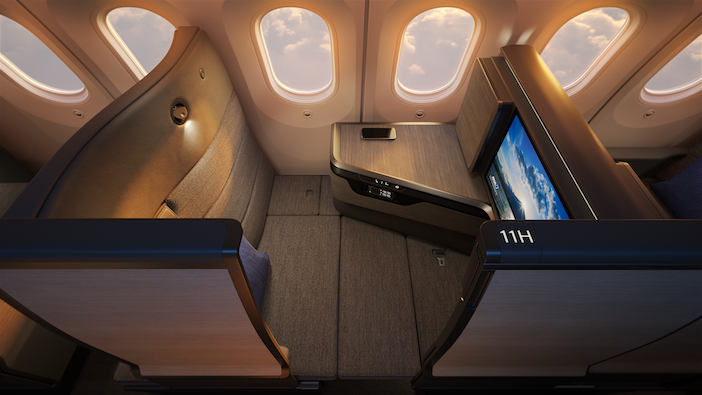
The suite, designed in cooperation with Acumen Design Associates and Safran Seats, combines the forward- and aft-facing seats into a single structure that serves two passengers, saving weight and space. This space efficiency is enabled by an innovative mechanism whereby the seatback remains fixed while the legrest (the only moving part) deploys to create the infill for the continuous lie-flat sleeping surface.
The suite is the result of several years of development from concept to commercialisation, and builds upon the design principles of ANA’s larger Boeing 777-300ER seat, branded as ‘THE Room’, which launched in 2019. ANA says THE Room FX is “the world’s largest seat in its class on a mid-sized aircraft”.
The living space in the seat has been reconfigured from the B777 model with refined design elements, including thinner backrests, partition walls and privacy doors (each of the 48 seats has a door). The alternating front and rear facing seat arrangement (1-2-1 at a 103 in pitch) optimises the use of space in the Boeing 787 cabin, with the aim of creating a spatial experience comparable to that of a larger aircraft.
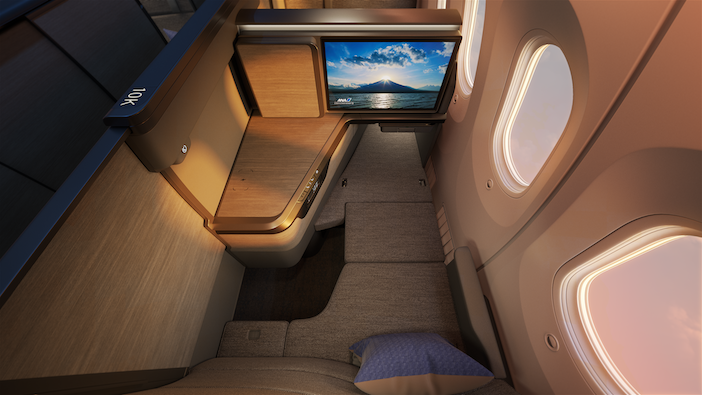
You can find more details of THE Room FX HERE.
A new feature of the 2026 awards is that the judging panel was asked to provide anonymous feedback of why they selected their preferred entry in each category. Quotes from the jury for THE Room FX include:
“Delivering a spacious passenger experience within a highly constrained footprint through exceptional design efficiency and minimal mechanical complexity”
“It optimises weight while enhancing comfort and functionality, balancing passenger needs and airline requirements”
“By improving existing seat architecture without compromise, even in smaller fuselage cross-sections, it provides a deeply innovative solution expanding space without added weight.”
Runners up:
Air France La Premiere first-class suite
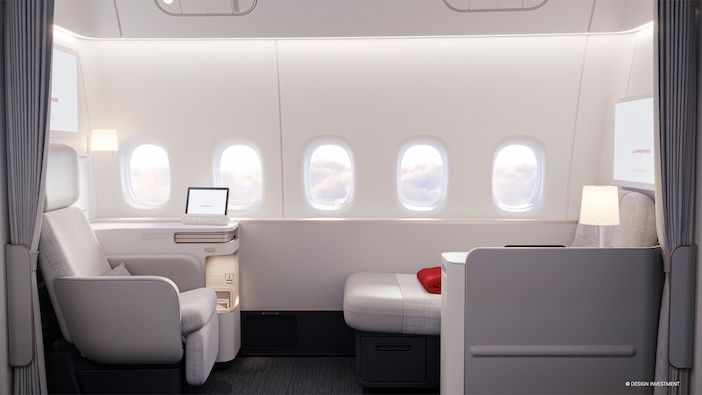
Air France’s La Premiere first-class suite for the Boeing 777, created in cooperation with Design Investment and Stelia Aerospace, provided strong competition. The suites (in a four-abreast arrangement) offer separate areas for sitting and sleeping.
The seat and bed zones each feature a 32-inch IFE screen, and the bed includes a split mattress for flexible sleeping positions. A “ribbon” design connects the zones and integrates curtains for privacy, and all functions can be controlled via the tablet device provided.
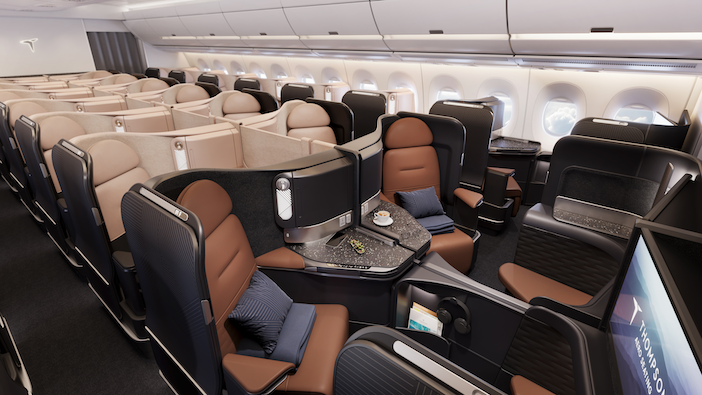
Thompson VantageNOVA First
Thompson Aero Seating made the finals with VantageNOVA First, a flexible seating platform for the front row of the business-class cabin that can be transformed from a single seat into a double or four-seat configuration with a ‘Star’ arrangement that enables four travellers to sit directly facing each other for shared dining and social interaction.
The layout creates a premium, first-class-style experience without reducing seat density in the forward business-class cabin.
Category: Passenger Comfort
Increasingly differentiated passenger expectations are driving the development of new ideas to enhance comfort in the aircraft cabin. The finalists in this category demonstrated how ergonomics, space utilisation, flexibility, and connectivity are being advanced across the different cabin classes.
Winner: Collins Aerospace with SkyNook
Collins Aerospace triumphed with the SkyNook suite, a semi-private area in the rear of a widebody aircraft specifically designed to accommodate the needs of families travelling together.
Many widebody aircraft fuselages taper inward at the aft of the aircraft, requiring airlines to reduce the standard triple economy row into double seats, leaving an unused space between the cabin sidewall and the seat. Every square inch of cabin space is valuable, and Collins devised a simple but effective means to transform this free space into a seat option that will be deliberately selected rather than endured.
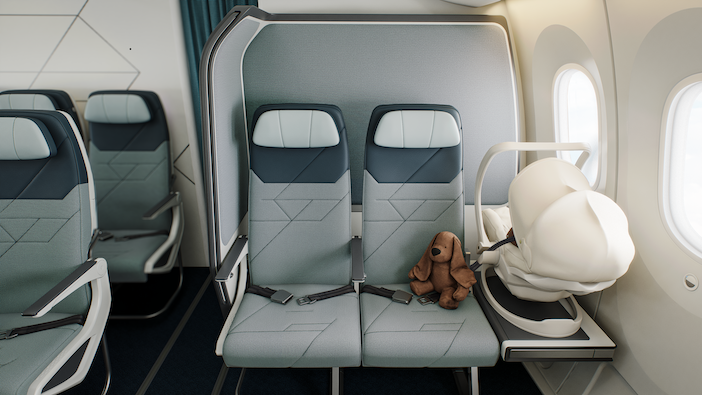
SkyNook adds a convertible console that slides and folds from the side of the outboard seat, to create a secure surface that can support a baby bassinet, complete with belt mountings to secure a car seat to the console throughout all phases of flight, if required. The surface can also be used as an extra surface area for working, dining, playing – whatever a passenger might want.
A compact sliding divider also helps create a feeling of privacy and security from the aisle and galley/lav area.
Collins Aerospace has secured a (currently unnamed) launch customer for SkyNook, which is due to begin flying its enhanced aft rows later this year.
What the jury said about SkyNook:
“Transforming previously unusable cabin space into a flexible, value-generating area that enhances passenger comfort and airline revenue potential.
“It addresses real passenger and operational pain points, including families traveling with toddlers, by improving underutilised economy-class zones.
“The solution is practical, quickly implementable, and adaptable, turning unused space into desirable seating with clear multi-purpose benefits.”
Runners up:
Airbus – Airspace A350 First Class cabin
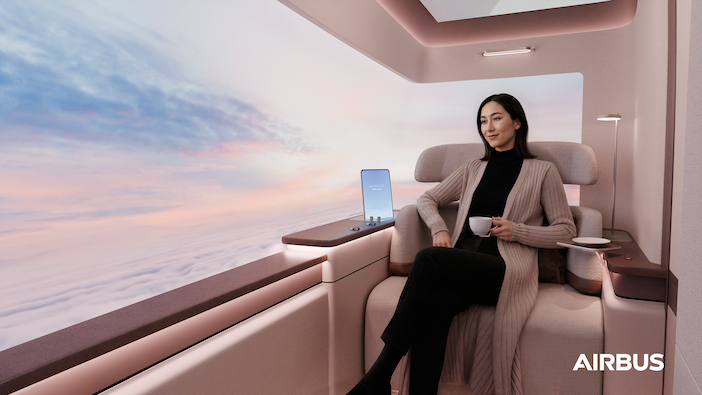
The Airspace A350 First Class cabin concept is an evolution of the A350-1000 cabin that creates an exclusive and high-end first-class experience. The new centre module contains a private master suite with a double bed, and its own private lavatory area and bar. Virtual panoramic windows further enhance the sense of spaciousness in the suite. It’s a stunning concept, but did not quite make the top spot.
BMW Designworks – Spaceframe
Spaceframe is a concept for a modular economy-class seat system that combines lightweight design, ergonomic support, and sustainable materials. The concept enables a space-efficient, flexible seating layout with an ergonomic mesh backrest, modular equipment, and integrated infrastructure for power, lighting, and wireless charging. Even better, the seat is fully recyclable.

Category: Accessibility
The Accessibility category recognises ideas that help enable barrier-free and inclusive travel for all passengers, including wheelchair users. The drive for accessibility is gaining momentum, thanks to the efforts of various organisations and campaigners, such as Chris Wood, founder of Flying Disabled., who is a new member of the judging panel.
Winner: Diehl Aviation – AURS
The Adaptive User Routing System (AURS) transforms the aircraft lavatory into a space that blind and deaf, and sight and hearing impaired passengers can navigate with confidence. Diehl developed the system in collaboration with travellers who have sensory impairments, to create an accessible lavatory layout with smart digital functions that adapt instantly to the user’s individual needs.
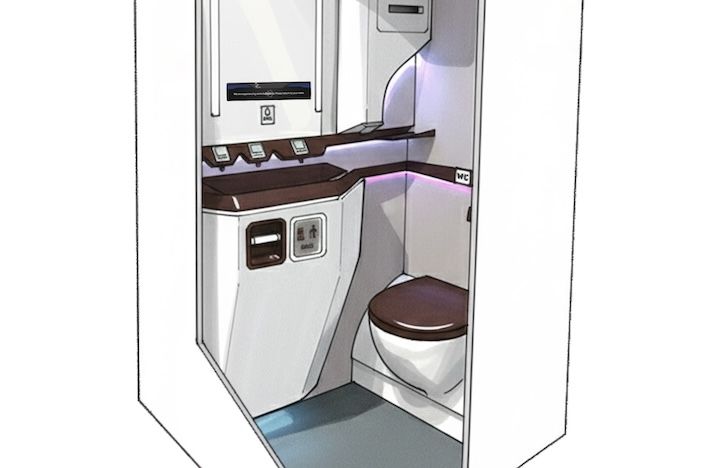
High-contrast surfaces, tactile guidance, Braille, and distinct control shapes make orientation intuitive while reducing unnecessary contact with potentially dirty surfaces. Any audio safety announcements are also displayed visually on the integrated mirror display, while the adaptive lighting and optional audio cues highlight essential elements and support passengers with low vision.
Diehl has worked to ensure the features are simple to access, with personalised accessibility features automatically activated via a simple Bluetooth beacon or airline app. with no extra steps required.
AURS is built on Diehl Aviation’s existing connected-cabin technology, and is fully certifiable and ready for airlines to order and deploy.
What the jury said about AURS:
“A highly innovative and practical approach to aircraft lavatory accessibility, integrating universal design into a standard lavatory architecture that can be adapted for a wide range of use cases.
“It combines personalised beacon settings and a tailored interface to address diverse accessibility needs in an intuitive, dignified, and near-term implementable solution with potential applicability across the wider aviation ecosystem.”
Runners up:
Airbus – Airspace U Suite
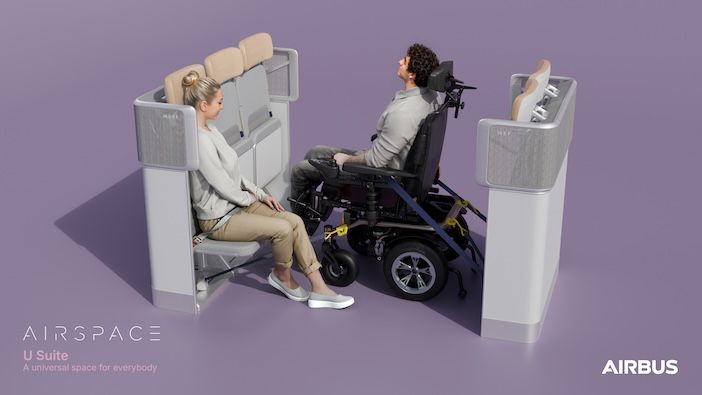
Airbus was competing with a universal cabin concept. The Airspace U Suite, billed as a ‘Universal Space for Everybody’, enables wheelchair users to travel in their own wheelchair without the need for manual transfers.
A secure restraint system and flexible seating configurations allow semi-private seating, face-to-face arrangements, and premium areas for all passenger groups. This sleek, effective and flexible design was created in cooperation with Ipeco Holdings and AMF-Bruns.
RAVE Aerospace – Live Transcription and Translations
RAVE Aerospace (formerly Safran Passenger Innovations (SPI)) presented Live Transcription and Translations, a system it says represents an industry first. Cabin announcements are displayed in real time as text on the seatback IFE monitor, to aid the hearing impaired.
Passengers can select their preferred language, so announcements are not only transcribed, but also translated. The feature is available in RAVE Standard and RAVE Accessible Mode, and is part of the standard RAVE IFE system offering.

Category: Cabin Technologies
This category focuses on technological and conceptual innovations for systems, components, and processes. The finalists have shown how AI, sensors, robotics, and user-centred design can increase operational efficiency, enhance safety, and improve both crew workflows and the passenger journey.
Winner: AviusULD – SmartULD Fire Tag
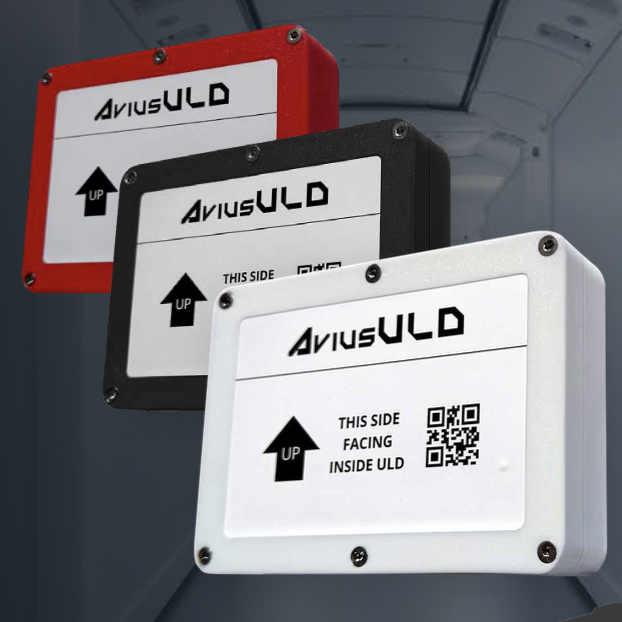
Thermal runaway fires caused by lithium-ion batteries are a big safety issue in aviation, and AviusULD has engineered a technology that does not just detect a fire: it detects the changes in gas compounds that indicate a fire will take place – up to two hours before a fire occurs.
The compact Fire Tag boxes, developed in cooperation with Eloc8, can be installed in cabin overhead bins, as well as on the Unit Load Devices (ULDs) that are loaded into the cargo hold, thereby improving safety in both passenger and cargo aircraft.
What the jury said about SmartULD:
“A simple and elegant approach to a highly relevant safety challenge. It addresses the growing issue of device-related risks without adding certification burden or complex system integration.
“Recognising its practicality and forward-looking relevance, the jury sees strong potential for it to become an industry baseline, prioritising safety as a fundamental and necessary innovation.”
Runners up:
Jamco – C-Galley
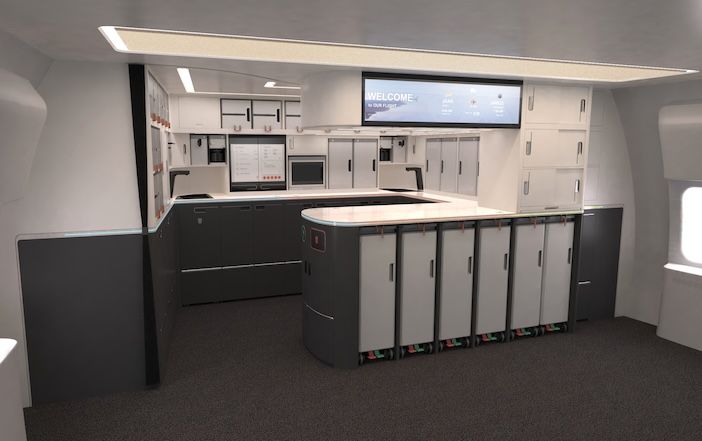
Jamco worked with JAXA (the Japan Aerospace Exploration Agency) to develop the C-Galley, a galley concept for the aft cabin that is designed to support workflows for cabin crew. The addition of a C-shaped work surface creates separate work zones for handling food, beverages, and sales, reducing walking distances for busy crews, and mitigating cross-traffic in the aisles.
The central work surface, with its storage on both sides, increases efficiency and can also serve as a snack area outside service times, without changing the overall footprint and stowage volume of the galley.
ZAL – Automated Quality Inspection
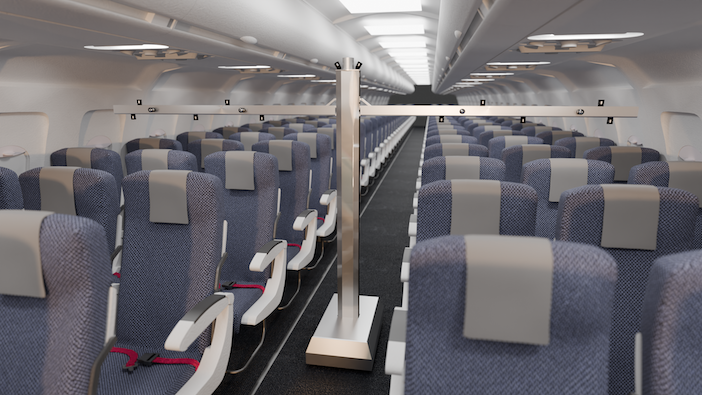
ZAL Centre of Applied Aeronautical Research, in cooperation with 3D.aero and Hamburg University of Technology, was a finalist with its Automated Quality Inspection system. The robotics- and AI-based system automates cabin inspections, detects visual deviations quickly and objectively, and generates a detailed 3D model.
The system can be flexibly deployed for OEMs, airlines, and maintenance operations. As a proof of concept, ZAL says that 100% of deviations were detected during testing in a cabin in just 30 minutes.
Category: IFEC & Digital Services
Digital services are becoming increasingly important to the in-flight experience. The finalists in this category represent advances for inflight connectivity (IFC), inflight entertainment (IFE), personalised services, and Cloud-based platforms that advance both operational processes and the passenger experience.
Winner: Delta Air Lines’ Connected Onboard Platform
The Connected Onboard Platform (CoP) is a first-of-its-kind digital architecture that unifies operational, connectivity, and passenger-experience data across any IFE or IFC provider.
The CoP integrates data from traditionally separate onboard systems to eliminate fragmentation, reduce costs, and increase operational reliability at scale. The entire Delta Air Lines fleet, which amounts to more than 1,000 aircraft, is being equipped with this new technology.
Delta reports that the CoP has already delivered measurable improvements, including 25% fewer IFE defects, higher cabin reliability, and increased first-time-fix rates, which is creating “significant” cost savings in maintenance and bandwidth. The same architecture powers Delta Sync, enabling personalised IFE content, tailored offers, and proactive service recovery informed by real-time data.
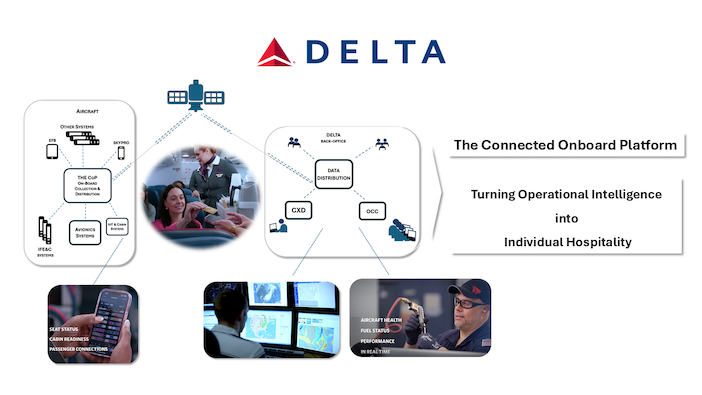
What the jury said about Delta’s CoP:
“A groundbreaking advancement in integrating customer, crew, and operational experiences within a unified digital architecture.
“By consolidating maintenance, cabin crew, passenger experience, and operations into a single open platform, it enables seamless integration of multiple vendors and services.
“Its system- and connectivity-agnostic design provides Delta with exceptional flexibility, laying the foundation for a true technological breakthrough in IFEC ecosystems.”
Runners up:
Veyond Metaverse – In-Flight Medical Assistance tech
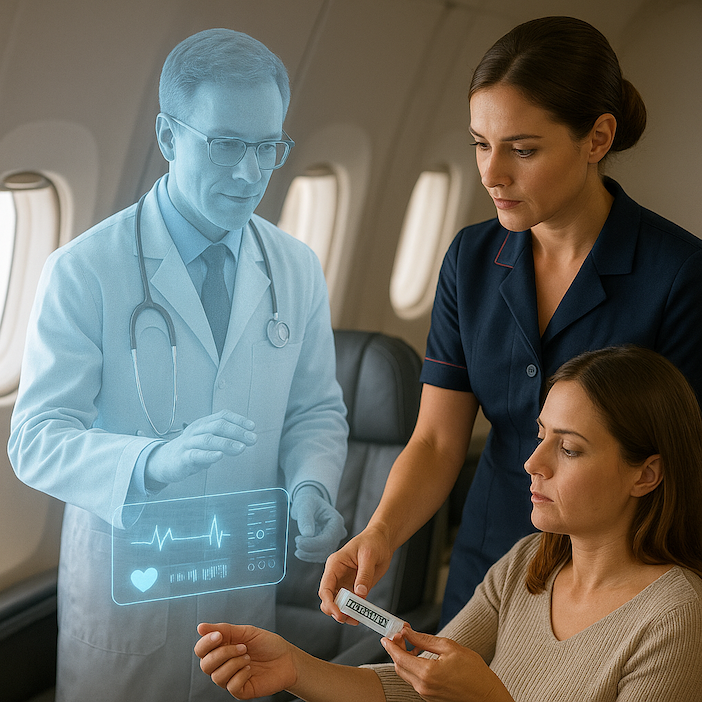
Veyond Metaverse‘s FlyMD 5D XR In-Flight Medical Assistance Platform is a technology designed to help attend to medical emergencies on board, by enabling physicians on the ground to give real-time medical advice and instructions.
The system transmits a three-dimensional live view of the cabin to a dedicated team of physicians, supporting more precise situation assessment and improved crew guidance via existing onboard connectivity systems.
United Airlines’ connected experience
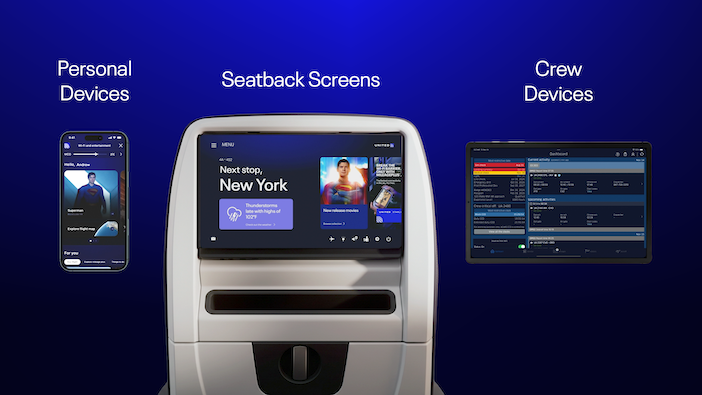
United Airlines’ entry, ‘Delivering the First Connected, Omni-Channel Passenger Experience’, is a Cloud-based onboard architecture designed to deliver a consistent, connected passenger experience across its fleet.
In collaboration with Starlink, Axinom, and Spotify, the system integrates connectivity, inflight entertainment, and personal devices, providing the technological foundation for a scalable, low-maintenance, and customisable passenger experience.
Category: Sustainable Cabin
Sustainability is a key innovation field in aviation. The finalists in this category demonstrate how lightweight design, recycled and bio-based materials, and circular design approaches can reduce weight, emissions, and environmental impact while meeting functional and aesthetic requirements.
Winner: Recaro Aircraft Seating – R Sphere
Sustainability has become a central design principle in aviation. This category winner demonstrates how environmental requirements and high functional standards can be consistently combined in cabin design.
The modular R Sphere – Sustainability Concept Seat saves approximately 1.5 kg per passenger and reduces CO₂ emissions by around 55 metric tons per single-aisle aircraft annually. The seat is made of recyclable materials, service-friendly modular components, and optimised surfaces for cleaning and maintenance, thereby supporting a sustainable and flexible cabin configuration.
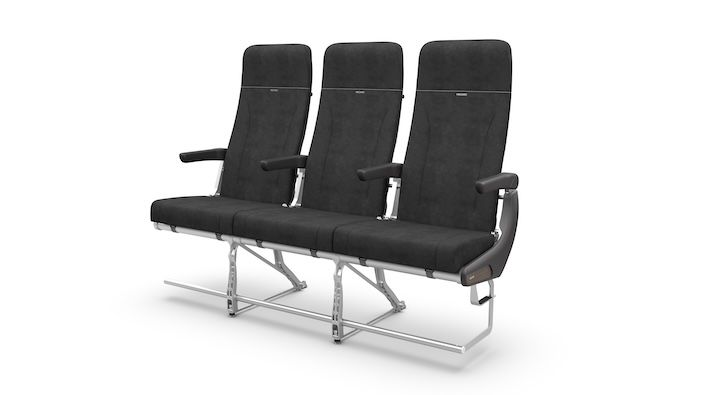
What the jury said about R Sphere:
“It combines multiple dimensions of sustainability—including materials, weight reduction, and circularity—into a single seat concept.
“A key highlight is the use of a sugar cane-based composite material.
“Already in revenue service, the seat delivers significant weight savings, modern premium design, and a strong focus on recyclable materials.”
Recaro’s long-standing commitment to sustainability and continuous incremental innovation was also praised.
Runners up:
Testori 1904 – Plant-based Fibre Textile System
Testori 1904’s Plant-based Fibre Textile System has been developed for seat covers, curtains, and vertical surfaces in aircraft cabins. The materials meet the same technical, aesthetic, and flame-retardant standards as synthetic or animal-based fibres, and contribute to product circularity while reducing the environmental footprint.
ZIM Aircraft Seating – The Frame
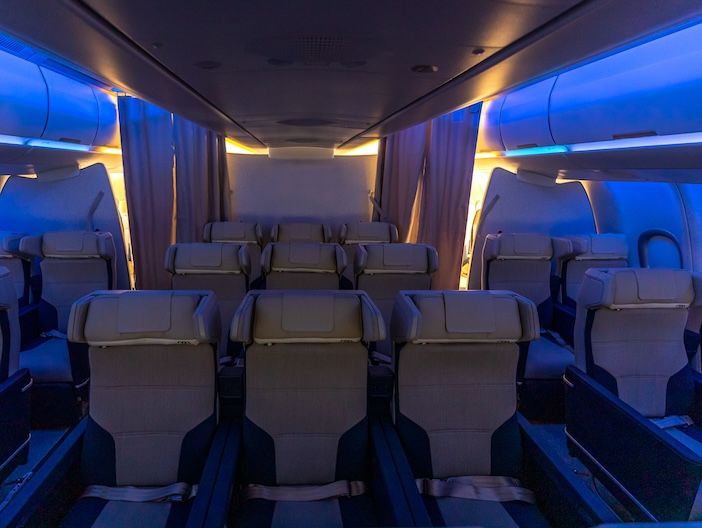
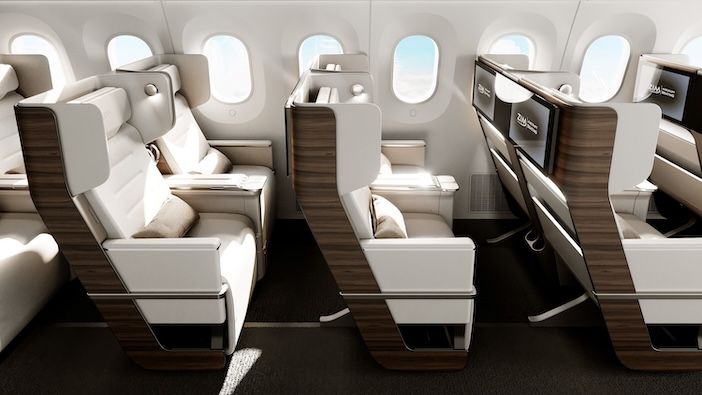
ZIM Aircraft Seating was a finalist with The Frame, a new generation of seats featuring modular, repairable wood components designed for durability and low maintenance. Laminated wood elements reduce the use of synthetic materials, reduce weight and fuel consumption, and enable recycling at end-of-life.
Category: Breakthrough Start-ups
The Breakthrough Start-ups category is new for 2026, with a focus on fresh perspectives, entrepreneurial agility and disruptive ideas in the cabin sector. The finalists all created novel cabin concepts and digital solutions that challenge established structures and have the potential to reshape the industry sustainably.
Winner: Quvia – In-Flight Digital Experience Platform
Quvia says it has developed the first AI-powered Quality of Experience (QoE) platform for commercial aircraft, which creates the backbone for future in-flight digital experiences. Quvia is a Series A startup seat up in 2023 and headquartered in the greater Miami region.
As passengers expect more choice and as the lines between IFC and IFE continue to blur, airlines need a clear understanding of how their entire digital experience performs—not just the network. Quvia delivers this through real-time QoE insights, deep operational diagnostics, and emerging IFE visibility, creating the industry’s first unified view of the digital cabin. This clarity helps airlines move from guesswork to action, resolving issues faster, preventing repeat failures, and improving reliability fleet-wide.
The Quvia Grid system gives airlines intelligent control of both the in-cabin network and the multi-provider, multi-orbit links behind it, powered by AI that classifies traffic, predicts demand, and optimises routing to balance cost and performance.
Beyond that, Quvia is developing new capabilities that bring intelligent data movement between the aircraft and cloud—enabling content, system updates, and operational data to flow without disrupting passengers. Together, these capabilities form am modern digital backbone that helps airlines deliver stronger experiences today while accelerating the future of in-flight digital systems.
What the jury said about Quvia:
“A significant impact on airline operations and customer experience
“A true game changer. It addresses a core and growing industry need by consolidating data from multiple IFEC and IFC suppliers into a unified view.
“By removing ambiguity in a complex environment, it provides airlines with unprecedented visibility, control, and optimisation across fleets and aircraft types.”
Runners up:
GMI – Green Mobility Interior
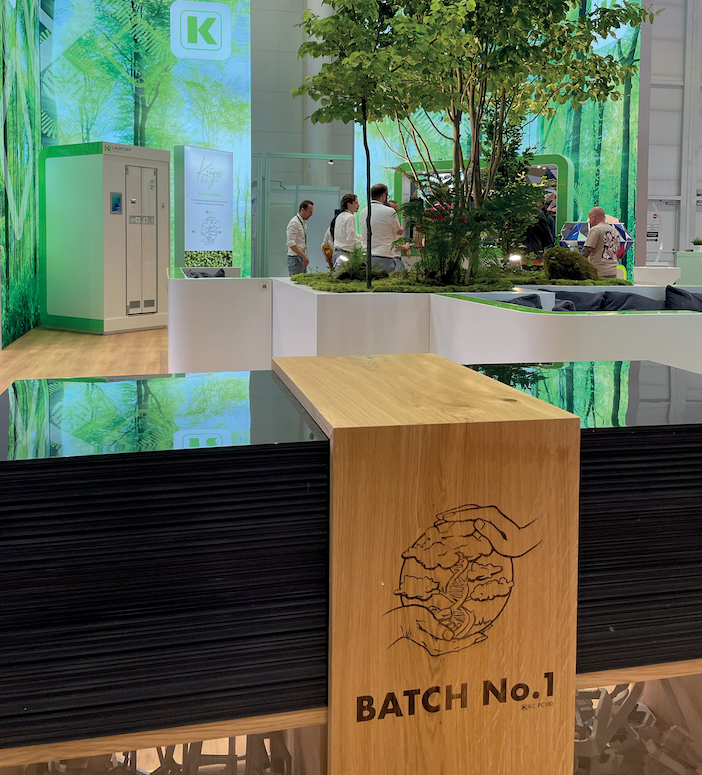
GMI’s Green Mobility Interior is designed to help build a more sustainable future for the aircraft cabin interior industry through novel material solutions. Founded in 2021, the company reduces plastic waste through a closed material loop for aviation-certified plastics.
With GMI’s processes, production waste is recycled and reintegrated into the supply chain, with full traceability. With the Zero-Waste Countertop for the A320 family, GMI has demonstrated that a circular economy strategy in the cabin is industrially feasible today.
Smair – smairGO
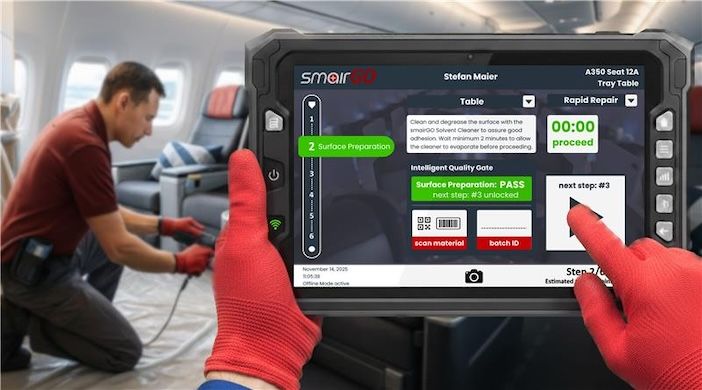
Smair, in cooperation with EK Engineering, made the finals with smairGO, a digital system for aircraft cabin appearance and lifecycle management. The system standardises and documents methods of repairing cosmetic damage in the cabin.
Through validated procedures, digital workflows, and full traceability, smairGO makes cabin repairs predictable, repeatable, and sustainable across the entire lifecycle, as an alternative to costly components replacements.
Category: University
The visionary ideas from academia and research are always a fascinating part of the Crystal Cabin Award competition. As ever, in the 2026 awards, students and research institutions from around the world demonstrated how creative approaches, new technologies, and interdisciplinary collaboration can shape the aircraft cabin of tomorrow.
Winner: Georgia Institute of Technology, SMARTrack
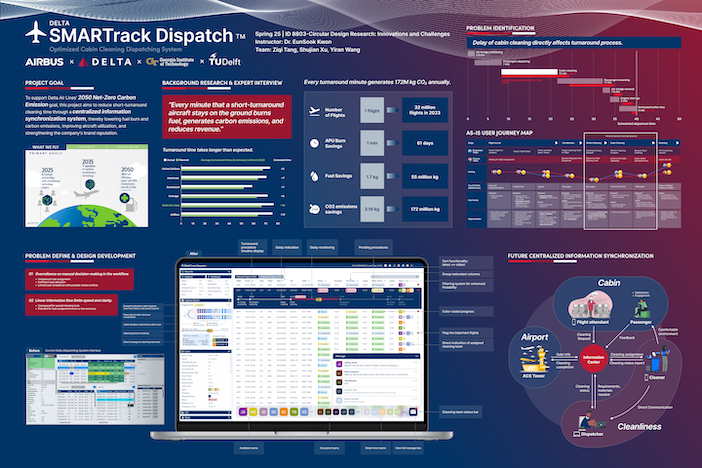
The SMARTrack Optimised Cabin Cleaning Dispatching System concept optimises cabin cleaning dispatch operations to reduce turnaround delays between landing and return to service, while supporting net-zero 2050 targets.
By centralising information and improving workflow coordination, the system concept would reduce delays during short turnarounds, which can lead to wasted fuel, increased CO₂ emissions, and reduced aircraft utilisation. Through expert interviews and industry data, the Georgia team identified that even one minute of delay across global flights results in massive annual environmental and financial losses.
The team found that current dispatching processes are overly manual, linear, and slow, which creates bottlenecks in cleaning coordination. The redesigned interface introduces grouped information, filtering tools, colour-coded status tracking, and real-time communication to support faster decision-making. A future centralised information hub connects cabin crew, cleaners and dispatchers. The concept was developed in cooperation with Airbus, Delta Air Lines, and TU Delft.
What the jury said about SMARTrack:
“A clear real-world operational benefit combined with a relatively simple technological and implementation approach.
“By streamlining aircraft cleaning through centralized task management and real-time data flow, it improves turnaround efficiency and reduces workload across roles.
“The solution enables faster boarding processes, delivering measurable cost and CO₂ savings, with significant benefits for airlines and passengers alike.”
A note from the organisers of the awards
“The Crystal Cabin Award 2026 demonstrates that the people building today’s aircraft cabins are taking responsibility for passengers who want to travel on equal terms regardless of mobility and deserve not to depend on assistance onboard; for a planet that demands solutions; and for a future that requires bold ideas. The fact that we are recognising startups with a dedicated category for the first time this year is no coincidence, but a signal for the future,” said Ralf Gust, president of the Crystal Cabin Awards Association.
I would like to add a note of praise for Ralf Gust and his team on putting together such a large awards programme. His team includes Angus Baigent, Angela Wockert, Felix Hörnke, Darcy Tomlin and Caroline Oxley.
If you have a new innovation you would like to be considered for the 2027 The application phase for the 2027 Crystal Cabin Awards, the application process will open in September. You can find all relevant details on the CCA website.
Aircraft Interiors International is a Media Partner of The Crystal Cabin Award, and editor Adam Gavine is a member of the judging panel.
The 2026 Crystal Cabin Award judging panel:
- Walé Adepoju, entrepreneur and business consultant (experience includes senior executive roles at Global Eagle)
- Peter Cooke, design manager, aircraft cabins, British Airways
- Kathryn Doyle, associate director, strategic marketing, Collins Aerospace
- Paul Estoppey, senior director, head of cabin product management, Lufthansa Group
- Marico Ferraz Gobato, interiors and cabin systems engineer – core engineering department, Embraer
- Claudia S. Friedrich, partner, director of the interface design business unit, Zweigrad Industrial Design
- Dr Holger Friehmelt, head of institute, Institute of Aviation FH Joanneum Graz (University of Applied Sciences), Austria
- Adam Gavine, editor, Aircraft Interiors International magazine
- Dr Dierk Hickmann, CEO, Engineering Office Dierk Hickmann
- Zuzana Hrnkova, vice president marketing, ATR
- Mary Kirby, editor and publisher, Runway Girl Network
- Prof. Dr Gordon Konieczny, professor of aircraft cabin architecture, Hamburg University of Applied Sciences
- Dr Joe Leader, CEO, APEX / IFSA
- Maribell Buedo Leyva, director of engineering, development and operations, AerQ
- Joseph (Joe) M. Keegan, executive director, systems product development, Boeing Commercial Airplanes
- Quentin Munier, EVP, Safran Seats France
- Bruno Oldenbürger, team lead innovation & advanced development, Recaro Aircraft Seating
- Wah Li Ong, vice president product innovation, Singapore Airlines
- Melissa Raudebaugh, general manager – aircraft experience, Delta Air Lines
- Dr Joerg Rissiek, senior vice president sales, marketing and business development, Diehl Aviation
- Kathrin Rusitschka-Knispel, director business development & Airbus account, Thales InFlyt Experience
- Mariya Stoyanova, vice president guest experience, Etihad Airways
- Corinne Streichert, founder and CEO, IFECtiv LLC
- Paul Sweeney, senior manager, product, cabin development, Qantas
- Prof. Peter Vink, professor at the faculty of industrial design engineering, Delft University of Technology
- Christopher Wood (MBE), director, Flying Disabled
- Ingo Wuggetzer, vice president cabin marketing Airbus Operations GmbH