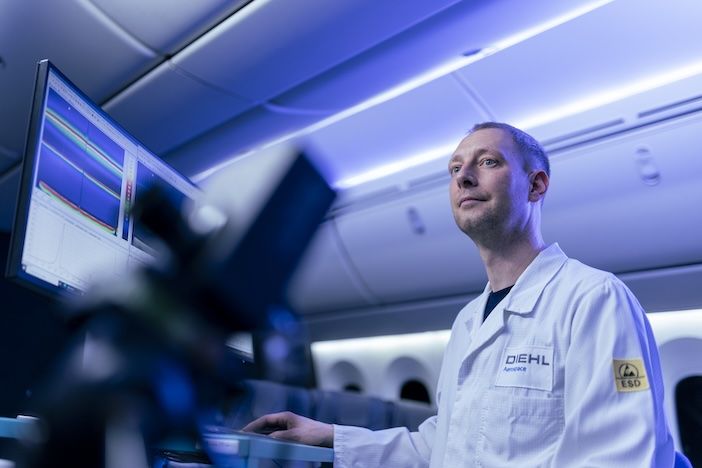

What does it take to create the perfect cabin lighting experience? At Diehl Aviation’s Light Verification Centre (LVC) in Nuremberg, Germany, scientists and engineers investigate every aspect of aircraft cabin lighting, from the behaviour of individual LEDs to passenger perception, in full-scale cabin environments. The teams apply a data-driven approach that combines cutting-edge research, validation, and long-term reliability testing.
The experts in the LVC work to develop and validate cabin lighting far beyond the scope of conventional laboratory testing. The goal is to create not only a luminaire, but also to ensure the perfect lighting experience, maximum reliability, and long-term performance throughout the aircraft’s lifecycle.
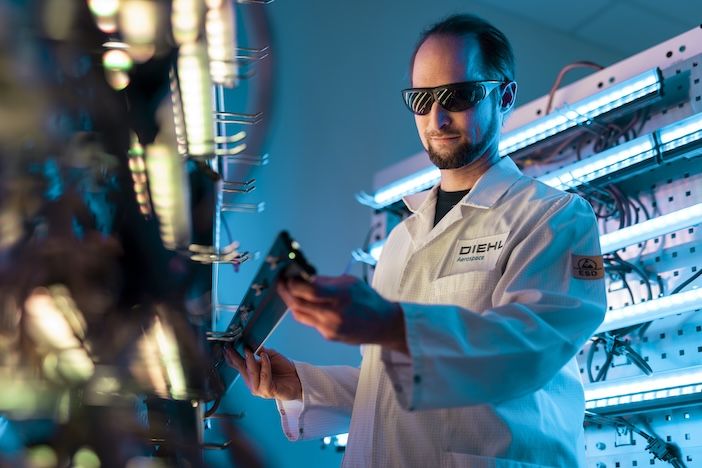
The process starts at the component level. Individual LEDs are meticulously characterised and measured for beam patterns, spectral properties, thermal behaviour, ageing effects, installation constraints, optical performance and long-term durability. In addition to established LED technology, the LVC team also evaluates emerging technologies, such as micro-LEDs, projection systems, display systems, and future lighting concepts, as part of their integrated research activities.
Based on these investigations, prototype luminaires are developed and analysed using advanced optical test equipment. Through the use of integrating spheres, photometric benches, large goniometers, high-precision light sensors, and spectrometers, detailed performance data can be derived for serial developments. Optical engineers continuously compare these measurements with computer simulations, refining both the products and the simulation models to achieve ever-greater accuracy and optimisation.
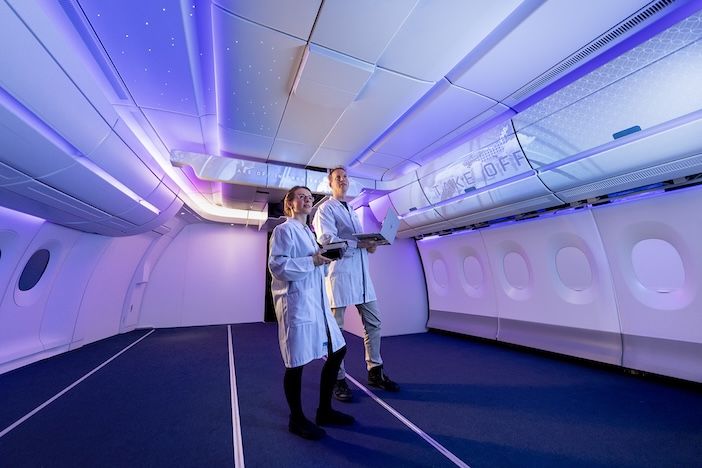
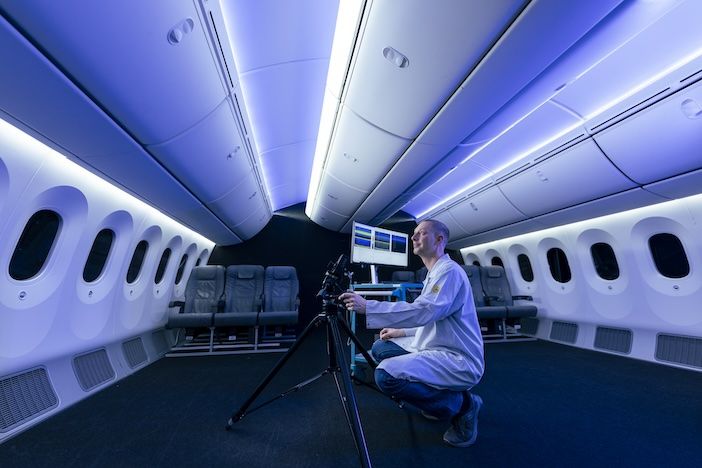
However, lighting cannot be assessed by numbers alone. It must be experienced. Therefore, Diehl Aviation operates several full-scale cabin mock-ups within the LVC facilities. Some mock-ups are up to eight meters in length and represent different aircraft platforms. Within these realistic cabin environments, the engineers evaluate illumination effects, beam angles, installation locations, and passenger perception under real cabin conditions.
At the same time, new lighting products undergo extensive endurance testing. The team simulates continuous operation, power interruptions, and various control scenarios to verify robustness and system behaviour. A system will only be presented to a customer after Diehl has ensured that the reliability, lifetime, functionality, and cabin appearance of a system fully meet expectations.
Cabin lighting for aircraft upgrades
Unlike platform-independent retrofit products, Diehl Aviation’s lighting systems are engineered specifically for each aircraft programme, optimised for cabin integration.
Aircraft cabin lighting has evolved significantly over the decades, progressing from fluorescent tubes to today’s advanced LED systems. Throughout this evolution, Diehl Aviation has developed lighting solutions in close cooperation with aircraft manufacturers, specifically designing every product for its respective aircraft programme.
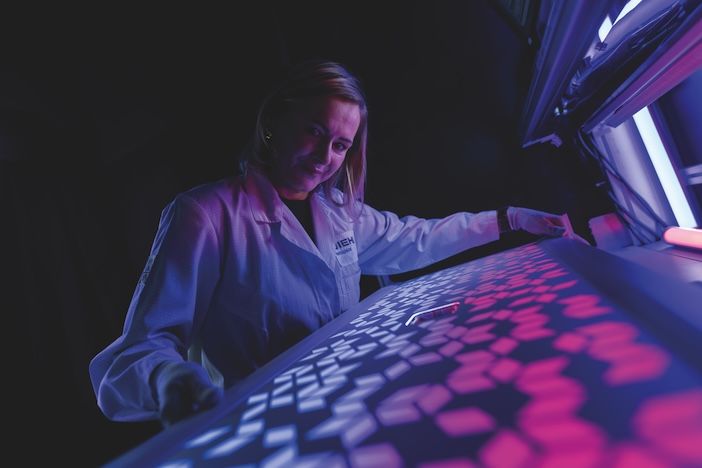
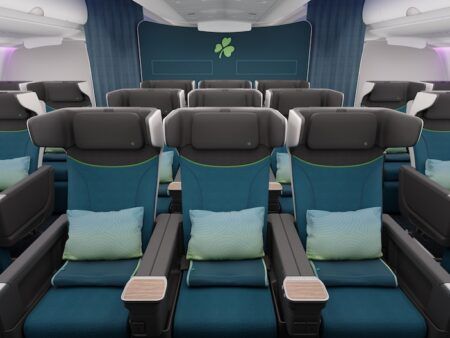
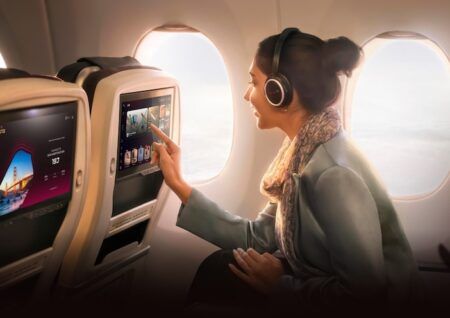
Dirk-Achim Schevardo, senior business development manager for upgrade solutions at Diehl Aviation, says that platform-specific cabin lighting ensures optimal light distribution, seamless cabin integration, and a passenger experience that aligns with the design intent of the aircraft manufacturer.
“All our lighting solutions are developed according to stringent OEM quality standards and undergo comprehensive testing, verification and certification as part of the complete aircraft system. As a result, airlines benefit from highly reliable, proven lighting technology that consistently performs well throughout the aircraft’s operational life – not only for new aircraft, but also for upgrades and refreshes during their operation.
“A further advantage is long-term lifecycle support. Through contractual partnerships with major aircraft manufacturers, Diehl provides certified spare parts, obsolescence management, and product support for as long as the aircraft programme remains in production and active service.”
And the experts at the LVC will ensure the lighting technology is always the best they can make it.