

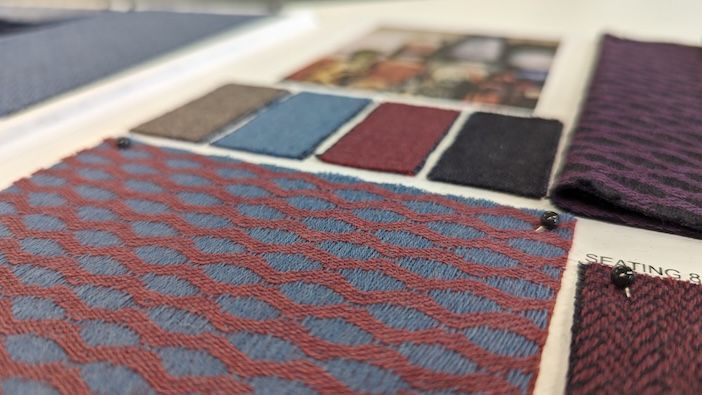
Replin by Hainsworth has developed a next-generation 100% wool fabric concept that it claims is the first naturally dyed, aviation-compliant seat fabric in the world. The fabric, revealed at Aircraft Interiors Expo (AIX), has been developed in collaboration with Tintoria di Quaregna, a specialist in natural dyes, to meet demand in the aircraft interiors market for sustainable, and vibrant fabric-dyed options.
Together the companies have created a means of using natural dyes derived from plants such as madder, poppy, and European goldenrod. All the dye formulations are derived from botanical and mineral sources using closed loop, non-topic methods that avoid the use of heavy metals and synthetic auxiliaries.
Replin by Hainsworth says that this process achieves high levels of colour fastness, light stability, and dry clean capacity, meeting the demands of high traffic, high luxury aviation interiors. At end-of-life, the fabric biodegrades naturally, eliminating the need to send it to landfill, and aligning with circular economy principles.
The naturally dyed wool yarns can also be woven with meta-aramid blends such as Nomex to create vertical surface fabrics. Although this formulation would no longer biodegradable, these fabrics would still achieve a low carbon and chemical footprint while retaining certification compliance for fire safety and performance.
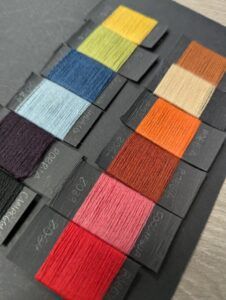
The company, which is the aviation fabrics division of the AW Hainsworth mill in the UK, has created four 100% biodegradable colours so far, and a further four meta-aramid blended colours, with testing and development ongoing to broaden the colour palette available.
The seat fabric is currently undergoing performance testing, as well as abrasion and strength testing in order to evaluate its durability on a final product level. Replin is confident the tests will be successful, given the proven compliance of its existing textiles and its ISO 9001 certification for quality and traceability in manufacturing.
“The industry has been dependant on chemical dyes for decades, and currently every widebody cabin refurbishment produces 1-2 tonnes of seat fabric waste, contributing thousands of tonnes of non-biodegradable waste each year,” said Angela Augusto, technical and innovation manager at Replin by Hainsworth.
“Undyed natural materials simply don’t offer the colour flexibility that airlines need, so our challenge was to develop a fabric made with traceable natural dyes that delivers on sustainability and colour flexibility, while meeting strict aviation performance standards. This innovation combines sustainability with design freedom and we’re really looking forward to sharing it at this year’s AIX.”