

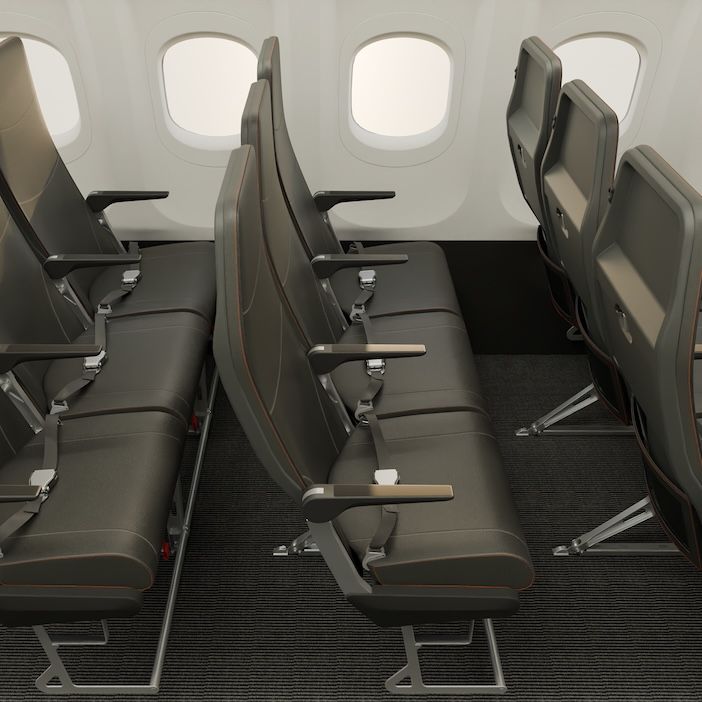
European low-cost carrier, easyJet, has ordered new short-to medium-haul economy-class seats that it says are more than 20% lighter than the model it is currently flying. The airline has chosen the Kestrel seat model from UK-based Mirus Aircraft Seating for its order book of more than 230 aircraft (Airbus A320neo and A321neo), due to be delivered from 2028.
The Kestrel seat, which weighs 6.9 kg per pax fully dressed, has been chosen over the airline’s current seat, the SL3510 from Recaro Aircraft Seating, which weighs approximately 9 kg. easyJet says the weight saving can amount to a weight saving of up to 500 kg per aircraft for larger models in its aircraft fleet, for an estimated combined annual fuel saving of more than 12,936 tonnes, equivalent to over 40,513 tonnes of Co2.
According to Mirus, the sculpted design of the Kestrel seat can create up to two inches of additional legroom for passengers in the same seat pitch compared with some other seat models, while its pre-reclined structure increases knee and shin clearance.
Yopu can find out more about the Kestrel, and other new economy-class seat models, in latest Aircraft Interiors International annual seating review.
The Kestrel seat is designed for sustainability benefits beyond weight, with a robust structure for long-term durability in service, and a low part count and simplified design to reduce maintenance requirements. The seat is approximately 98% recyclable at end of life.
David Morgan, chief operating officer at easyJet, said the purchasing decision was made to capitalise on “small incremental gains that result in meaningful reductions in fuel burn and Co2 emissions.”
Ben McGuire, CEO of Mirus, added that the order marks “one of the largest single-model aircraft seat awards ever.”
In other cabin news at easyJet, from 2026 the airline is enhancing a number of its 180-seat A320ceo aircraft with the Airbus SpaceFlex rear galley and lavatory option, which facilitates the installation of an extra row of seats on each aircraft.