


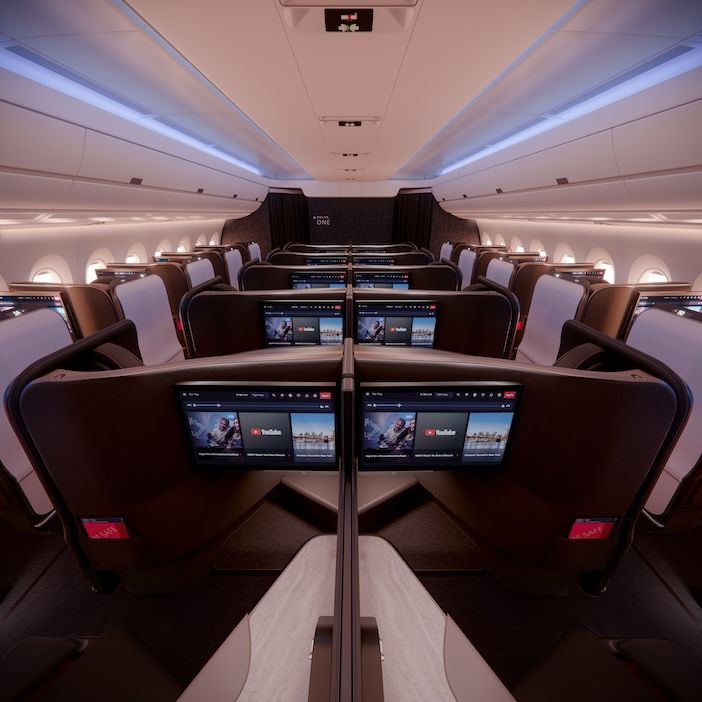
Delta Air Lines has unveiled the latest generation of its Delta One business-class suite, a design that is the result of an intensive two-year design programme, and built upon 10 years of customer insights since the launch of Delta One.
The new suites, the latest element in the airline’s US$1 billion-plus fleet upgrade investments, will be introduced on the airline’s 20 Airbus A350-1000s, which are due to be delivered from early 2027 and will be Delta’s largest aircraft.
So which seat platform has Delta selected for the new Delta One? Delta is the launch customer for the VantageNOVA platform by Thompson Aero Seating (TAS). The platform offers flexibility to operators, including the choice of a herringbone or reverse herringbone configuration on the outboard column. Delta has selected reverse herringbone for its A350-1000 aircraft, so the outboard seats are angled towards the windows, giving a view of the skies.
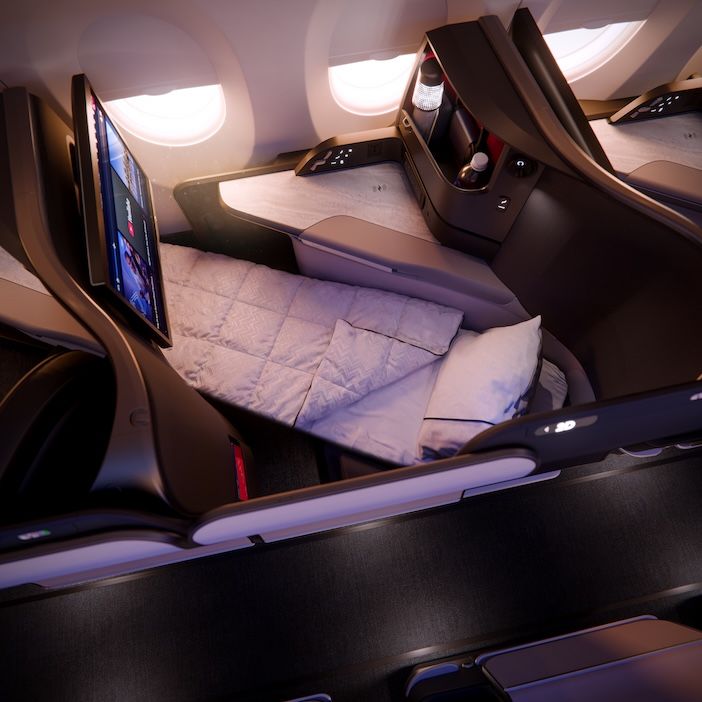
Each seat converts to a fully flat bed with a minimum length of 80 inches, up to 3 inches more than the original suite, with a pillow-top cushion that sits on top of the memory foam, and luxury bedding from Missoni. The airline has now also opted for the zero-G function, whereby the seat can tilt and lower the passenger’s body while raising their legs, giving the most relaxing position for the heart.
“We showed Delta the baseline seat and all the elements where we thought they might consider making customisations to tailor the seating to the precise needs of their passenger demographics. Delta of course opted for all the most technical and ambitious adaptations, but we love a challenge at TAS,” said Barry McKay, programme manager at Thompson Aero Seating. The teams also worked with the Factorydesign studio.
The TAS design DNA will be familiar to Delta customers, as the original Delta One suite is based on the TAS VantageXL platform. The airline specified individual sliding doors, and when it launched in 2016 Delta One became the world’s first all-suite business-class cabin.
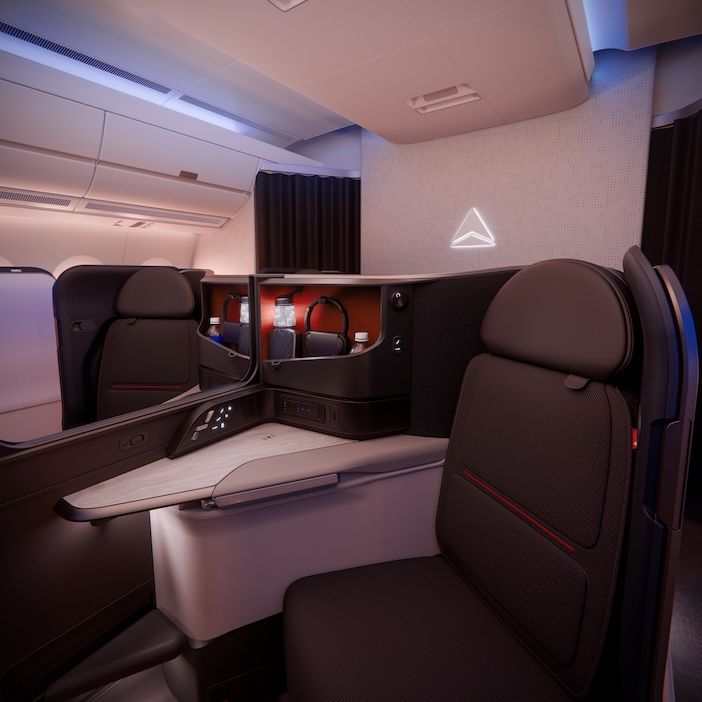
Of course, Delta has again opted for sliding privacy doors, overhung to the outside of the suite to maximise interior space. Further in-suite features include tactile seat controls, a signature feature lamp, in-suite mood lighting, and stowage options that include a cubby for shoes, a tray that is within easy reach of the bed (handy for accessing a phone), and a hook for eyeglasses.
Another highlight is the 24-inch 4K QLED IFE display from Thales (the largest ever fitted in a Delta aircraft) on which to enjoy a content library of movies, games, sports and TV series via the new Delta Sync experience. The tech continues with Bluetooth connectivity so customers can pair their own headphones, a USB-C socket, and a wireless charging pad for devices that is built-in to a stone inlay on the console.
Airbus A330-200/300 fleet upgrades
Delta is also upgrading its Airbus A330-200/300 cabins with Delta One suites featuring privacy doors, which is a first for these aircraft types in its fleet. Many of the design elements from the A350-1000 suites, including the soft product, technology and lighting features, will be incorporated into the A330-200/300 suites to create a consistent customer experience.
“Every time a customer boards a Delta flight, the experience and surroundings should feel familiar,” said Mauricio Parise, Delta’s vice president of brand experience. “That was the driving factor behind every intentional design feature and investment we made in developing our brand-new A350-1000 experience, which we extended through nose-to-tail upgrades of our A330-200/300s and will continue to roll out across our fleet.”
The airline anticipates that by 2030, 90% of Delta One seats in its fleet will be suites with sliding privacy doors. The A350-1000 and A330-200/300 upgrades follow the introduction of Delta’s updated cabin look and feel in 2025, which it says received “overwhelmingly positive feedback and a 25-point increase in customer satisfaction scores”.
That new interior design is being applied to the A350-1000s and on more than 800 of Delta aircraft over the next five years as the airline takes delivery of new aircraft and invests in interior refreshes across its current fleet.
A new refreshment station
Another interesting new development for Delta’s A350-1000s and A330-200/300s is a dedicated refreshment station for Delta One customers, located at the main entryway on the A350-1000, and at the front of the A330-200/300. The station is a handy destination when stretching your legs or feeling peckish.
“This snack station gives customers control over their time – small choices like when to grab a snack can feel meaningful,” said Mauricio Parise. “We are deliberate about making it easy for customers to get what they need when they need it and offering a flight experience that best meets the needs of each customer. Whether you’re working, travelling with kids or simply awake when others are sleeping — it’s there for you.”
Accessibility features
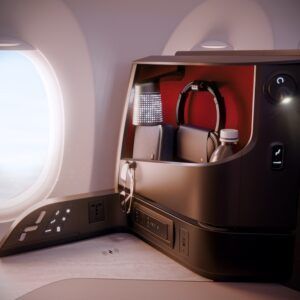
New accessible features have also been integrated into both the A350-1000 and A330-200/300 fleets, developed in consultation with Delta’s Advisory Board on Disability & Accessible Travel. The features include a custom-designed seat control centre with a design inspired by luxury vehicles, which uses tactile elements that enable customers to intuitively adjust seat comfort through the sense of touch.
The tactile features carry over into the lavatories, and each aircraft will have a dedicated accessible lavatory with more space for customers with reduced mobility.