

Ultrafabrics has released findings from comparative testing carried out to determine the influence of upholstery on seating comfort. The tests examined 11 physical performance parameters for various upholstery products, including softness, flexibility, heat transfer, thermal resistance, and moisture management.
Ultrafabrics, which is a manufacturer of high-performance coated fabrics and leather alternatives, appointed the FILK Freiberg Institute in Germany, an independent, accredited research institute specialising in flexible polymer materials, to conduct the tests. The aim was to offer seating manufacturers, designers and specifiers a more definitive way to quantify comfort at the material level.
Many designers associate seating comfort with cushioning, ergonomics, and/or how a surface feels at first touch. According to Ultrafabrics the findings of the tests show that upholstery also influences the seated experience due to its continued contact with the body.
Thus, the role of upholstery is especially important in settings where people may remain seated for hours at a time, including transportation environments such as aircraft cabins. Other applicable settings include workplaces, healthcare facilities, and leisure and entertainment spaces such as theatres and stadiums.
Multiple comfort factors
The research demonstrates seated that comfort cannot be defined by a single material property. Softness and flexibility shape the initial tactile experience, while the tests showed that thermal performance and moisture management influence how a surface feels during longer periods of contact. The ability of a material to bend, exchange heat, and allow moisture vapour to pass through can affect seat comfort over time.
Ultrafabrics points out that, for seat manufacturers, designers and specifiers, considering these characteristics together provides a practical way to compare upholstery materials according to the needs of an application. Comfort-related performance can also be evaluated alongside established criteria such as appearance, durability, cleanability, and water repellency.
“Comfort is a complex and highly personal experience, but many of the material properties that contribute to it can be measured,” stated Jennifer Hendren, VP of product development at Ultrafabrics. “The goal of this research was to better understand those properties and provide the industry with useful information for evaluating upholstery beyond appearance and first touch.”
How Ultrafabrics materials performed in the tests
The company says that, across the 11 physical performance parameters evaluated, the Ultrafabrics upholstery materials included in the study delivered the most consistent overall performance when compared with the polyurethane, vinyl, silicone and bonded leather samples tested. The strongest results centred on breathability, softness, and thermal behaviour.
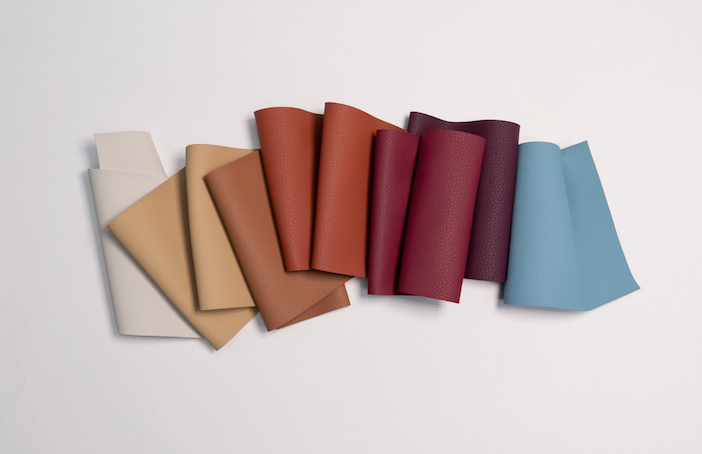
One material tested was Ultraleather, a faux leather widely used in aviation interiors through a long-standing partnership with Tapis Corporation. Ultraleather is engineered to deliver the look and feel of European calfskin, with similar levels of durability and abrasion resistance, but at a claimed third of the weight. Ultraleather ranked among the softest of the materials tested, with the highest softness measurement at 6mm.
Ultrafabrics says that its materials also recorded lower maximum heat-flux values than the polyurethane and vinyl samples. Lower heat-flux values indicate a more gradual heat exchange, creating a balanced, less reactive surface that avoids sudden temperature shifts and feels consistently comfortable to the touch.
“Upholstery is an important part of how a seat feels, both initially and over time,” added Jennifer Hendren. “By sharing these findings, we hope to support a more informed conversation about comfort across the seating industry.”
The complete comfort testing overview can be accessed via Ultrafabrics.