



The number of commercial aircraft in China offering in-flight connectivity (IFC) services is due to reach more than 2,300 by 2035, up from just over 400 today. This rapid increase in IFC system installations will mark a new era where IFC becomes increasingly common across China’s narrowbody aircraft.
The findings are part of a new report by Valour Consultancy, titled In-Flight Connectivity: China and India Deep Dive – 2026. The report (a preview is available) states that, despite China representing one of the most attractive long-term opportunities for the IFC industry, the market remains significantly under-penetrated today. By the end of 2025, IFC adoption among Chinese airlines was at below 10%.
Historically, market expansion in the IFC sector has been constrained by regulatory complexity, geopolitical considerations, and the uncertainty of a return on investment for airlines. However, growing passenger demand for cabin wi-fi, clearer business cases for airlines, and the emergence of new entrants such as Spacesail, are expected to accelerate the adoption of IFC from the early 2030s onward.
To date, IFC deployment in China has been concentrated among full-service and premium full-service carriers, including China Eastern Airlines, China Southern Airlines, Air China, and Cathay Pacific. Widebody aircraft currently account for the vast majority of installed systems, reflecting the premium positioning of connectivity services across the market.
“China remains one of the most strategically important IFC markets globally, but also one of the most complex,” commented David Whelan, senior analyst at Valour Consultancy and author of the report.

A surge in 2030 – 2035
Although adoption of IFC in China has been relatively slow to date, Whelan says the underlying market fundamentals are compelling. While near-term deployment activity is expected to remain modest, the period between 2030 and 2035 is forecast to be transformative.
“Large-scale, fleet-wide rollouts among China’s major state-owned airlines are expected to drive the next wave of growth, alongside increasing recognition of IFC as a passenger experience differentiator,” Whelan stated.
To date, Panasonic Avionics and SES have achieved the greatest success in penetrating the Chinese IFC market, although deployment remains highly complex and dependent on collaboration with numerous domestic stakeholders across the value chain.
Regulations require the use of Chinese satellite capacity over Chinese airspace, meaning connected aircraft must utilise domestic satellite operators such as China Satcom, APT Satellite, and potentially Spacesail in the future.
Local mobile network operators, including China Telecom and China Unicom, also typically play an important role in IFC deployments, further reflecting the uniquely localised structure of the Chinese connectivity ecosystem. Valour’s report provides an overview of the domestic supply chain and profiles on the major stakeholders in the local ecosystem.
Growth potential in India
The report also highlights strong long-term growth potential within India’s IFC market, albeit from a significantly lower starting point. By the end of 2025, fewer than 30 commercial aircraft in India were equipped with IFC systems, representing approximately 3% of the country’s total fleet.
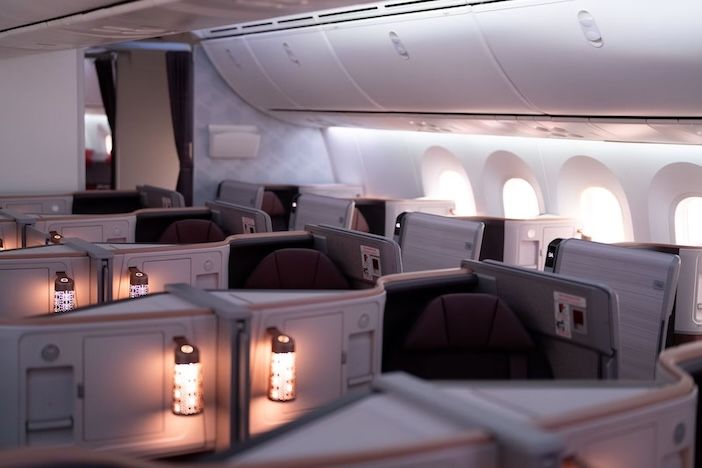
Adoption has been constrained by regulatory complexity, airline cost sensitivity, and the dominance of low-cost carriers (LCCs), alongside a fleet mix heavily skewed toward narrowbody aircraft.
Nevertheless, Valour Consultancy expects the connected aircraft fleet in India to grow in pockets over the next 10 years; driven primarily by further deployment activity at Air India and potential future adoption among low-cost carriers. However, the report notes that IFC penetration in India is likely to remain below levels seen in more premium-focused aviation markets.
“India represents a substantial addressable opportunity, but structurally it will remain a very different market to China,” added Whelan. “Growth will be relatively fast, but it is coming from an exceptionally low base, and long-term adoption will still depend heavily on the strategic decisions of a small number of major carriers.”