

When Air India returned to the Tata Group in 2022, one of the airline’s biggest priorities was rebuilding its fleet and restoring operational capability. Among the inherited legacy fleet of 113 aircraft were 30 widebody and narrowbody aircraft that had been grounded and neglected for years. Post-privatisation, Air India committed significant resources to revive each of these aircraft.
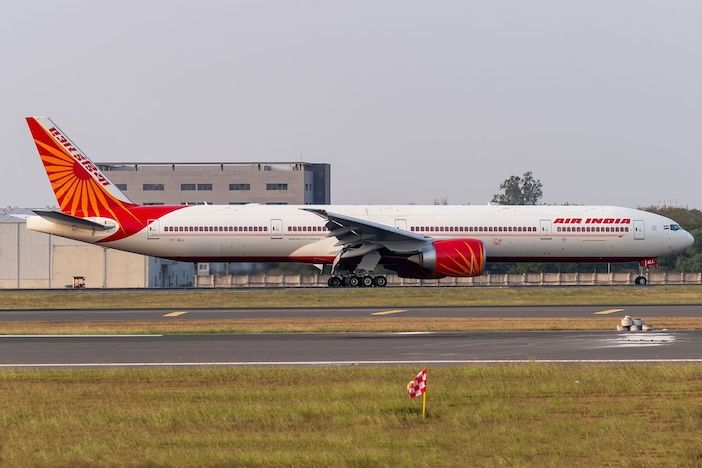
With the return of VT‑ALL, the Boeing 777‑300ER which is the last of the 30 grounded aircraft, the final chapter of this massive US$400 million revival effort is now complete. In the next phase, VT-ALL and the other B777 aircraft in the Air India fleet will undergo a full cabin interior retrofit, starting in 2027, and will be painted in the airline’s new livery.
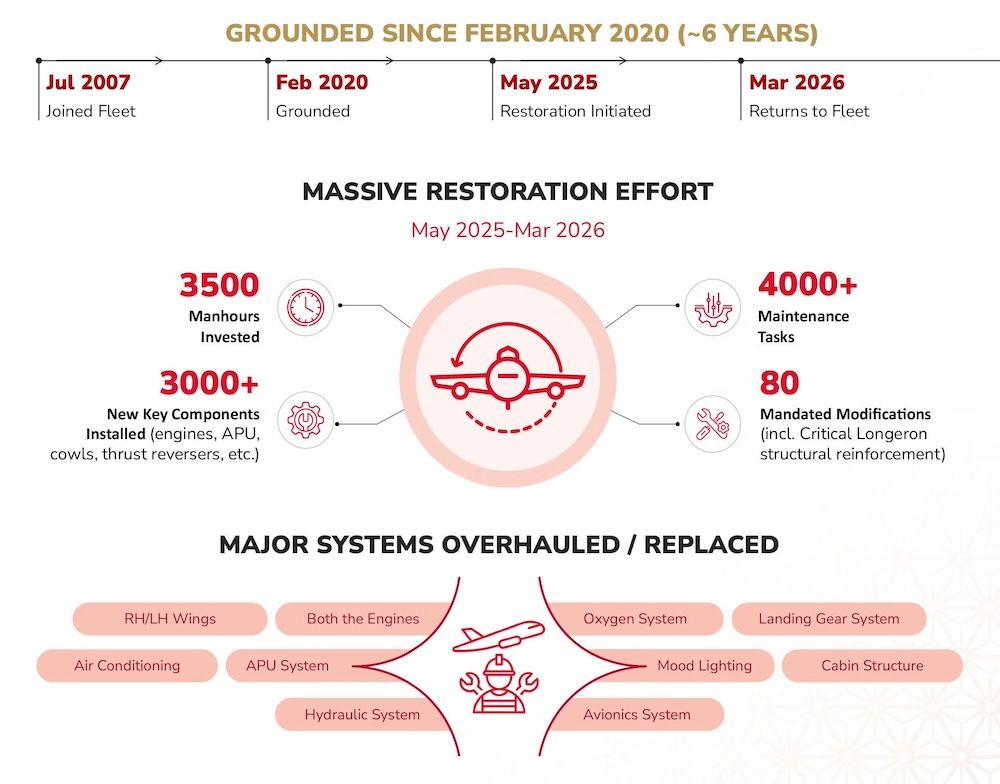
Six years out of commission
VT‑ALL was grounded in February 2020 due to issues including multiple unserviceable systems and ageing components. In April 2025, Air India initiated efforts to bring the B777‑300ER back to full operational life to support its long‑haul expansion plans. The aircraft entered the AIESL MRO facility in Nagpur, India in May 2025, where it has undergone an intensive, nose‑to‑tail restoration programme.
The scope of work included the installation of more than 3,000 new key components, and the completion of more than 4,000 maintenance tasks, including 80 mandated modifications such as the complex Longeron Modification, which is a crucial structural reinforcement.
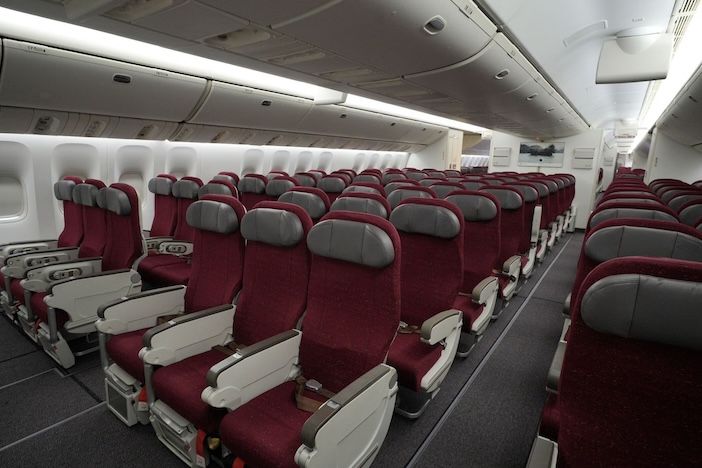
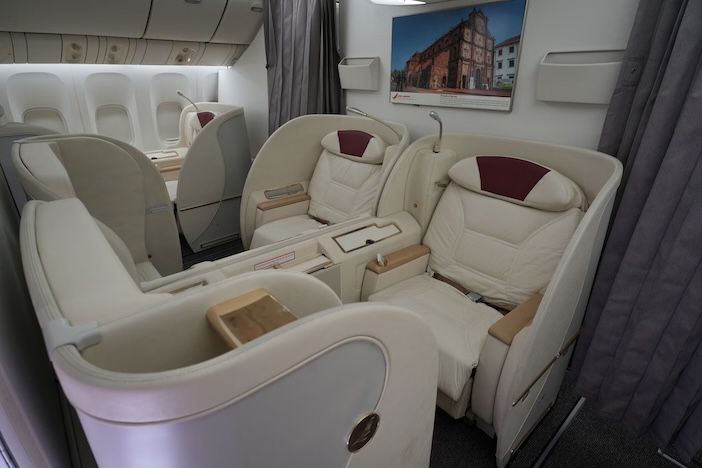
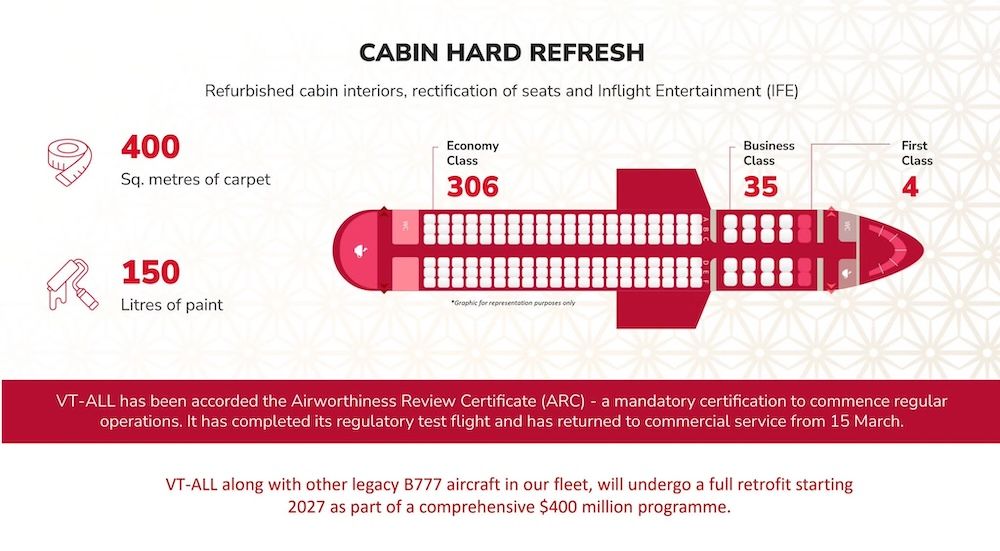
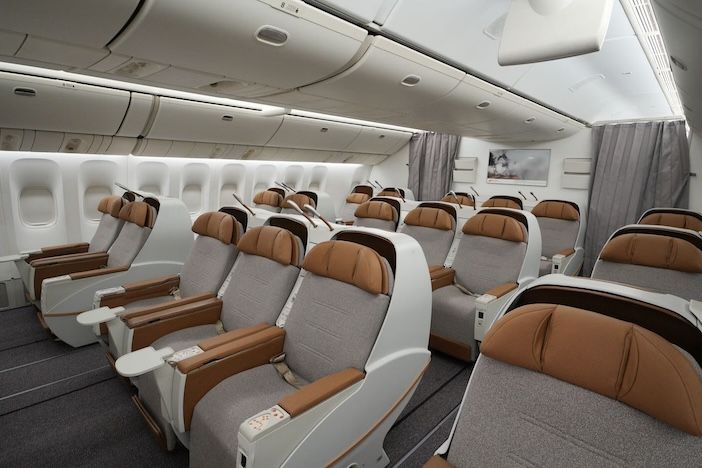
For the interior, 400 square metres of new carpet was installed, and all seats were refurbished (four in first class, 35 in business class, and 306 in economy class).
Major assemblies were also replaced, including the engine, APU, inlet & fan cowls, and thrust reverser cowls. VT‑ALL also underwent a full systems rebuild, covering air conditioning, landing gear, hydraulics, oxygen, avionics, and engine systems. Air India says that in effect the functional backbone of the aircraft was reconstructed.
Each part replacement, system restoration, and structural repair had to pass stringent testing, documentation, and regulatory oversight by India’s DGCA (Directorate General of Civil Aviation), with technical guidance from Boeing. Skilled engineering teams worked nearly round the clock to bring the aircraft back to life.
You can watch the restoration story of VT-ALL in this video.
Collaborative engineering
Air India says the recommissioning of VT‑ALL was driven by seamless coordination across Air India’s base maintenance, planning, technical services, procurement and supply chain, Project Management Office (PMO) powerplant, Continuing Airworthiness Management Organisation (CAMO), and quality assurance teams. Their combined effort ensured the aircraft was restored in in a short timescale and in accordance with the highest safety and performance standards.
VT-ALL takes to the skies again
VT-ALL has now passed all regulatory safety compliance requirements for its return to service, including successfully completing a test flight. It has also been granted an Airworthiness Review Certificate (ARC), which is a mandatory certification of the safety parameters for an aircraft to commence regular operations.
The return of VT‑ALL marks the successful revival of each of Air India’s 30 previously grounded aircraft.